

Hand play PowerPoint PPT Presentation
1 / 40
Title: Hand play
1
Hand play ????
2
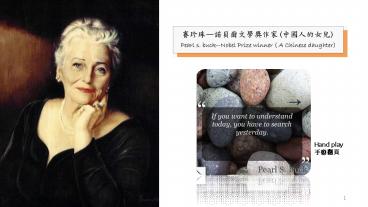
- Pearl Sydenstricker Buck (June 26, 1892 March
6, 1973) also known by her Chinese name Sai
Zhenzhu (Chinese ??? pinyin Sài Zhenzhu), was
an American writer who spent most of her time
until 1934 in China. Her novel The Good Earth was
the best-selling fiction book in the U.S. in 1931
and 1932, and won the Pulitzer Prize in 1932. In
1938, she became the first American woman to be
awarded the Nobel Prize in Literature, "for her
rich and truly epic descriptions of peasant life
in China and for her biographical masterpieces. - Pearl Buck was born in Hillsboro, West Virginia
to Caroline Stulting (18571921) and Absalom
Sydenstricker. Her parents, Southern Presbyterian
missionaries, traveled to China soon after their
marriage on July 8, 1880, but returned to the
United States for Pearl's birth. When Pearl was
three months old, the family returned to China to
be stationed first in Zhenjiang (then often known
as Jingjiang or, in the Postal Romanization,
Tsingkiang).Pearl was raised in a bilingual
environment, tutored in English by her mother and
in classical Chinese by a Mr. Kung. - Chinese man in Zhenjiang, c. 1900
- The Boxer Uprising greatly affected Pearl and
family their Chinese friends deserted them, and
Western visitors decreased. - In 1911, Pearl left China to attend
Randolph-Macon Woman's College in Virginia,
US,graduating Phi Beta Kappa in 1914 and a member
of Kappa Delta Sorority. From 1914 to 1933, she
served as a Presbyterian missionary, but her
views later became highly controversial in the
FundamentalistModernist Controversy, leading to
her resignation.
3
- In 1914, Pearl returned to China. She married an
agricultural economist, John Lossing Buck
(hereafter in this article Pearl Buck is referred
to simply as 'Buck'), on May 13, 1917, and they
moved to Suzhou, Anhui Province, a small town on
the Huai River (not to be confused with the
better-known Suzhou in Jiangsu Province). It is
this region she described later in The Good Earth
and Sons. - From 1920 to 1933, the Bucks made their home in
Nanking (Nanjing), on the campus of Nanjing
University, where both had teaching positions.
Buck taught English literature at the University
of Nanjing and the Chinese National University.
In 1920, the Bucks had a daughter, Carol,
afflicted with phenylketonuria. In 1921, Buck's
mother died and shortly afterward her father
moved in. In 1924, they left China for John
Buck's year of sabbatical and returned to the
United States for a short time, during which
(Pearl) Buck earned her Masters degree from
Cornell University. In 1925, the Bucks adopted
Janice (later surnamed Walsh). That autumn, they
returned to China. - The tragedies and dislocations that Buck suffered
in the 1920s reached a climax in March 1927,
during the "Nanking Incident." In a confused
battle involving elements of Chiang Kai-shek's
Nationalist troops, Communist forces, and
assorted warlords, several Westerners were
murdered. Since her father Absalom was a
missionary, the family decided to stay in Nanjing
until the battle reached the city. When violence
broke out, a poor Chinese family allowed them to
hide in their hut while the family house was
looted. The family spent a day terrified and in
hiding, after which they were rescued by American
gunboats. They traveled to Shanghai and then
sailed to Japan, where they stayed for a year.
They later moved back to Nanjing, though
conditions remained dangerously unsettled. In
1934, they left China permanently.
4
- In 1935 the Bucks were divorced. Richard Walsh,
president of the John Day Company and her
publisher, became Pearl Buck's second husband.
Walsh offered her advice and affection which, her
biographer concludes, "helped make Pearl's
prodigious activity possible." The couple lived
in Pennsylvania until his death in 1960.7 - During the Cultural Revolution Buck, as a
preeminent American writer of Chinese peasant
life, was denounced as an "American cultural
imperialist." Buck was "heartbroken" when Madame
Mao and high-level Chinese officials prevented
her from visiting China with Richard Nixon in
1972.8 - Pearl S. Buck died of lung cancer on March 6,
1973 in Danby, Vermont and was interred in Green
Hills Farm in Perkasie, Pennsylvania. She
designed her own tombstone. The grave marker is
inscribed with Chinese characters representing
the name Pearl Sydenstricker
?????????
???????
5
- 29 April 1962 Dinner for the Nobel Prize Winners
of the Western Hemisphere. L-R Mrs. Lyndon B.
Johnson, Pearl Buck, President Kennedy, Mrs.
Kennedy, Robert Frost, guests. White House, East
Room. Photograph by Robert Knudsen, White House,
in the John F. Kennedy Presidential Library and
Museum, Boston.
6
- Buck was highly committed and passionate about a
range of issues that were largely ignored by her
generation many of her life experiences and
political views are described in her novels,
short stories, fiction, children's stories, and
the biographies of her parents entitled Fighting
Angel (on Absalom) and The Exile (on Carrie). She
wrote on a diverse variety of topics including
woman's rights, Asian cultures, immigration,
adoption, missionary work, and war. - In 1949, outraged that existing adoption services
considered Asian and mixed-race children
unadoptable, Buck established Welcome House,
Inc., the first international, interracial
adoption agency. In nearly five decades of work,
Welcome House has placed over five thousand
children. In 1964, to support children who were
not eligible for adoption, Buck established the
Pearl S. Buck Foundation to "address poverty and
discrimination faced by children in Asian
countries." In 1965, she opened the Opportunity
Center and Orphanage in South Korea, and later
offices were opened in Thailand, the Philippines,
and Vietnam. When establishing Opportunity House,
Buck said, "The purpose... is to publicize and
eliminate injustices and prejudices suffered by
children, who, because of their birth, are not
permitted to enjoy the educational, social,
economic and civil privileges normally accorded
to children." - In the late 1960s, Buck toured West Virginia to
raise money to preserve her family farm in
Hillsboro, WV. Today The Pearl S. Buck Birthplace
is a historic house museum and cultural center.
She hoped the house would "belong to everyone who
cares to go there," and serve as a "gateway to
new thoughts and dreams and ways of life." - Long before it was considered fashionable or
politically safe to do so, Buck challenged the
American public on topics such as racism, sex
discrimination and the plight of the thousands of
babies born to Asian women left behind and
unwanted wherever American soldiers were based in
Asia. During her life Buck combined the multiple
careers of wife, mother, author, editor and
political activist.
Peals Bucks birthplace
7
(No Transcript)
8
(No Transcript)
9
(No Transcript)
10
- Contemporary reviewers were positive, and praised
her "beautiful prose," even though her "style is
apt to degenerate into overrepetition and
confusion." Peter Conn, in his biography of Buck,
argues that despite the accolades awarded to her,
Buck's contribution to literature has been mostly
forgotten or deliberately ignored by America's
cultural gatekeepers. Kang Liao argues that Buck
played a "pioneering role in demythologizing
China and the Chinese people in the American
mind."Phyllis Bentley, in an overview of her work
published in 1935, was altogether impressed "But
we may say at least that for the interest of her
chosen material, the sustained high level of her
technical skill, and the frequent universality of
her conceptions, Mrs. Buck is entitled to take
rank as a considerable artist. To read her novels
is to gain not merely knowledge of China but
wisdom about life." These works aroused
considerable popular sympathy for China, and
helped foment poor relations with Japan. - Anchee Min, author of a fictionalized life of
Pearl Buck, broke down upon reading Buck's work,
because she had portrayed the Chinese peasants
"with such love, affection and humanity"." - Buck was honored by the United States Postal
Service with a 5 Great Americans series postage
stamp.citation needed In 1999 she was
designated a Women's History Month Honoree by the
National Women's History Project. - (?????) Buck's former residence at Nanjing
University is now the Nanjing University Science
and Technology Industry Group Building along the
West Wall of the university's north campus. U.S.
President George H.W. Bush toured the Pearl S.
Buck House in October 1998. He expressed that he,
like millions of other Americans, had gained an
appreciation for the Chinese through Buck's
writing.
11
Pearl Buck with Her Family, 1939
- ???(Pearl Sydenstricker Buck?Pearl
Buck)(1892?6?26?-1973?3?6?),??????,?????1932?????
??(The Good Earth),????????????????1938????????
???????????????????????,?????????????? - 1892?6?26?,??????????????,???????????????(Absalom
Sydenstricker,1852?1931?),???????4??????????????(
???????),??????,???????????????????????,?????????
?????(?????????????)?,???????????????,????,???????
???? - 1910?,???????,?????????????????(Randolph-Macon
Woman's College)????1914????????,??????,???1917???
?????????,??????(John Lossing
Buck)?????????????????,?????????????????????????
1921?????????,??????,???????????????,?????????????
??????????1921?,????????(Carol)????,???????????(P
henylketonuria)?1925?,???????(Janice,???Walsh),???
?????8????1926?,?????,???????????????????????????
12
- 1930?,?????????????????,????????????1931?,?????
???????,??????????????????????????????1932??????
?????????????,??1935????????????? - ?????
- ??,1934??????????,????????????????,?????????????,?
???????????????????????????,????????????????????
?????????????,??1938?????????????????????? - ??????,????????100?????,?????????????????????,??
??,???????????????????????????????????????,??????
??????????????????????(???)??????????????? - 1973?3?6?????????????(Danby,Vermont)??,???????????
??????
13
- ??????????,??????????1937????????,????????????????
????????????????????,??????????????? - ???????????,?????????????????,????????????????????
?,?????????????,????,???????????????? - ??????????,??????????????????????????????,???????
???????????????????????,???????????,???????????,?
??????1954?10?,?????????????,??????????,??????????
???????????????!? - ?????????????????,??????????????????????????,?????
???????1972??????????????,?????????????????,??????
??????????? - ????????????????????????,?????????????????
- 1990????,?????????????????????2001??????????????
???????,????????????????????????????????????????
??
14
- ????? (??)????????(Pearl S. Buck)??????????,??????
6?? - ??????????18??
- 1887?,??????,?????(American Presbyterians (South)
,PS)??????(Absalom Sydenstricker,1852?1931?)????,
??????????????????????(North Kiangsu
Mission)?????????,?????????????,?????????????????,
???????????????,????????????????1892?10?,???????4?
????????????,???????,??????????????,??????????????
,???????????,?????????????,????????????????,??????
??????????????1907?,????????????????? - 1914?,???????????????????????????,?????????,??????
???????,???????,?????????????1917?????????????????
????????,?????? - 1925?,????????,????????,??????????,?????1931??????
??? - 2002?10?,????????????????????
15
(No Transcript)
16
(No Transcript)
17
(No Transcript)
18
- Imperial woman is one of the mastery works of
Pearl S. Buck. She once again captivates the
audience with intriguing adventure and
exploration of the ancient China through a single
woman. Imperial Woman is like the title,
fictionalized autobiography of Ci-Xi or TzU His,
the empress of the wade-Giles. The story starts
off with Ci-Xi going in to the palace as a
concubine of the XianFeng Emperor of Great China.
Even at an early age of 17 years old, she was
manipulative, dominating, and perhaps even
wicked. Tzu His was born into one of the poor
noble ranks in the imperial dynasty. According to
the custom, at the age of the seventeen, she
moved to the Forbidden City, and became one of
the hundreds of concubines. But her unique and
dominating power and undeniable beauty quickly
gets her up to the consort of the empress. On the
death bed of Xian Fend Emperor, she supposedly
became a head o the Qing Dynasty in 1908. She was
feared in many courts, but adored by the
peasants. Bucks detailed knowledge of the
self-involved, and infamous last empress of
china, and seeming realistic story of chinas
struggle for freedom and democracy takes the
readers to inescapable fascination.
19
????????
- ?????????????????????,????????(Pearl S.
Buck)??????? - 1919??,?????????????????????(John Lossing
Buck)???????,??1934????????????,????????????????
??????????????? - 1998?,???????????????????????????2000?5?,??????
????????,???????????????????????????????????????
?????????????????? - 2006?6?5?,????????????????????
20
(No Transcript)
21
(No Transcript)
22
(No Transcript)
23
- Pearl Buck lived in China for many years and
spoke the language so I am happy to accept the
authenticity of her writing. The Good Earth tells
the story of Wang Lung - a hard-working peasant
farmer with ambitions to improve his life. O-lan
is a plain servant girl (effectively a slave) in
the house of the local landowner. Wang Lung takes
her as a wife having said that he does not want a
beautiful woman but one that is strong and
willing to work and bear him sons. Love is not an
expectation.Although Wang Lung and his wife work
hard other things conspire against him and his
life is a continual struggle against poverty and
destitution. Buck writes in a very simple and
lucid way which somehow makes the issues that
she raises even more shocking. The story is
interwoven with infanticide, murder, drug-taking,
prostitution, greed and betrayal. But throughout
it all Wang Lung is convinced that it is the land
which will offer them salvation. For much of the
narrative Wang Lung and many of the other
characters are far from flawless but the author
doesnt judge them. Instead she relates their
actions and attitudes and leaves the rest to the
reader.It is not made absolutely clear when the
book was supposed to be set. Slavery was
abolished in 1910 so it is probably supposed to
be set about that time. By 1912 the Republic of
China had been created although there were many
internal factions leading to the era of the
warlords. The Good Earth was first published in
1931 so the story was written without knowing
the massive upheavals that were to occur in China
a few years in the future. But already the
country was in a state of flux with the mention
of distant wars and gangs of local robbers.
By Wynne
24
(No Transcript)
25
(No Transcript)
26
Pearl S. Buck House in Perkasie PA
27
(No Transcript)
28
(No Transcript)
29
(No Transcript)
30
(No Transcript)
31
(No Transcript)
32
?????????
33
Dragon Seed (Pearl S. Buck) (1944)
34
(No Transcript)
35
(No Transcript)
36
(No Transcript)
37
An intelligent, energetic, educated woman cannot
be kept in four walls even satin-lined,
diamond-studded walls without discovering sooner
or later that they are still a prison cell.
38
- ???????,?????,??????????,?????????????????????,??
????????,?????????????????????????????,??????????
?? - ?????1892?,???1895??????3???????????????????????,
?????????????????????????,????????????????????????
??????,?????????30??,?????????????????30??? - 1934??,?????10??????????,????????,???1935???????
????,???????????,???9??12????????????7???? - ??,???????????????,??????????40?????????,?????????
????,??????????????????????????,???????????????,??
??????????????????????
39
?????????????
40
??? Eddie Lee Taipei 12/8/2011 Most of the
photos were taken from internet leechangsheng5555_at_
gmail.com
?????????????
Recommended

