

Culture Shapes ' ' ' PowerPoint PPT Presentation
1 / 7
Title: Culture Shapes ' ' '
1
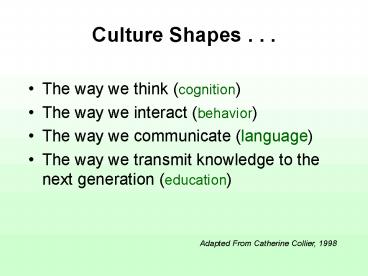
Culture Shapes . . .
- The way we think (cognition)
- The way we interact (behavior)
- The way we communicate (language)
- The way we transmit knowledge to the next
generation (education)
Adapted From Catherine Collier, 1998
2
Acculturation Variables
- Age/amount of time spent in the process
- Quantity and quality of interaction
- Ethnicity or nation of origin (similarities
between 1st and 2nd cultures) - Language proficiency (L1 and L2)
- Similarity between cognitive learning style
and teachers teaching style
3
7 Skills of Cultural Awareness
- The capacity to . . .
- 1communicate respect
- 2be non-judgmental
- 3personalize knowledge and perceptions
- 4display empathy
- 5demonstrate role flexibility
- 6demonstrate reciprocal concern
- 7tolerate ambiguity
4
Deep Culture
- Thoughts, beliefs, superstitions, religion
- Concerns, hopes, fears, worries, ethics, and how
you organize your thinking and world - Symbolic and intangible aspects of identity
- Subtle interpersonal relationships as expressed
in actions and words - Day-by-day details of life as it is lived
5
Surface Culture
- Music, visual and performing arts, drama
- Holiday celebrations and folklore
- Food/drink
- Traditional dress
- Historical contributions
- Outward displays of behavior and identity
6
Cultural Differences/Similarities
- Cultural differences/similarities that affect
student language, learning, and achievement - Traditions and family values
- Signs of importance and respect
- Teacher-centered vs. student-centered classrooms
- Perceptions of space and time
7
Reprinted by permission from Colorado Department
of Education, ELLEN Toolkit, 2nd Edition
- ,
- August 6, 2009
Recommended

