

Understanding Cholecystitis: Symptoms And Treatments PowerPoint PPT Presentation
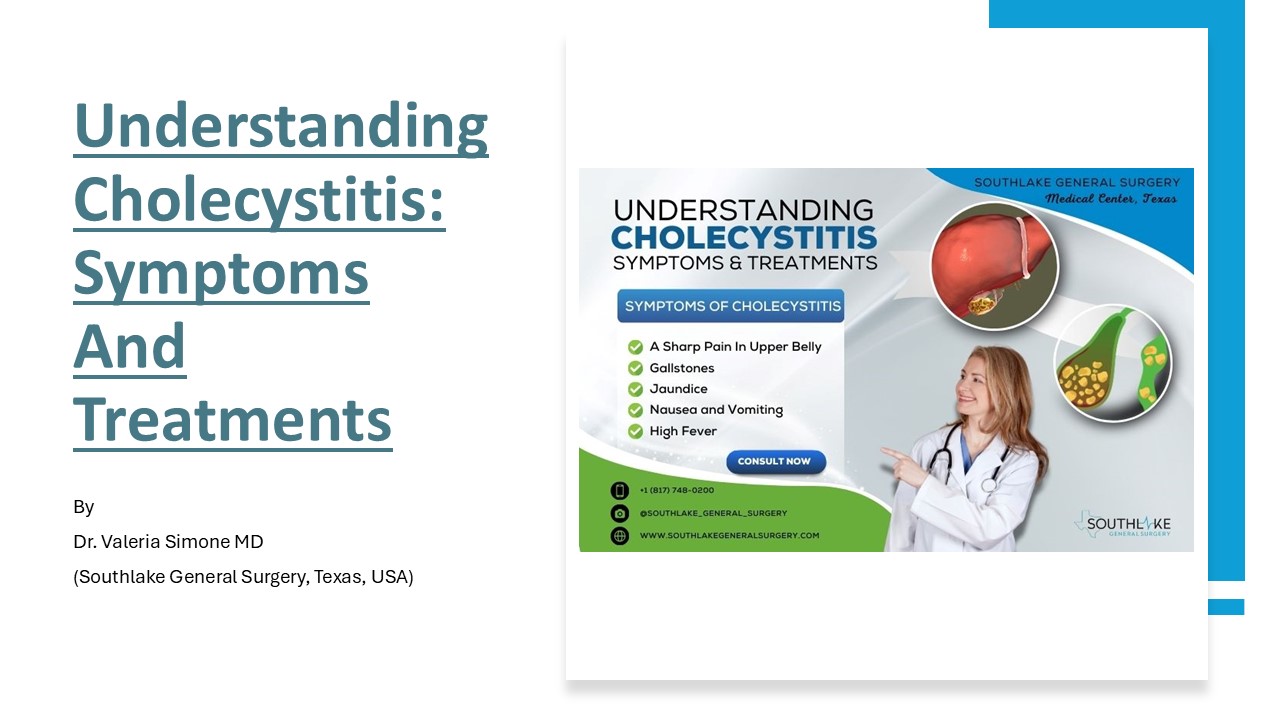
Title: Understanding Cholecystitis: Symptoms And Treatments
1
Understanding Cholecystitis Symptoms And
Treatments
- By
- Dr. Valeria Simone MD
- (Southlake General Surgery, Texas, USA)
2
Overview
- Cholecystitis is when the gallbladder becomes
inflamed. This can lead to severe abdominal pain
and discomfort. It often happens when bile in the
gallbladder gets stuck because of blockages, such
as gallstones. Its important to know the
symptoms of cholecystitis. Recognizing them can
help you get medical help quickly.
3
Key Highlights
- Cholecystitis happens when the gallbladder gets
swollen, often because gallstones block the
cystic duct. - Symptoms include sharp pain in the upper right
side of the stomach. This pain may spread to the
right shoulder blade. People might also feel
sick, throw up, or have a fever. - To find out if someone has cholecystitis, doctors
often order blood tests, ultrasounds, or maybe
HIDA scans or CT scans. These tests help see the
gallbladder and check how it is working. - Treatment usually involves a laparoscopic
cholecystectomy, which is a surgery to take out
the gallbladder. - It is important to know the causes, symptoms, and
treatments for cholecystitis. This helps catch it
early and manage the condition effectively.
4
What is Cholecystitis?
- Cholecystitis happens when the gallbladder
becomes swollen. The gallbladder is a small organ
that looks like a pear and is located underneath
the liver. Its main role is to keep bile stored
and let it go when necessary. Bile is a liquid
made by the liver to help digest fats. - When bile gets trapped in the gallbladder, it can
make it swollen. This can cause pain and serious
problems. A blockage usually occurs due to
gallstones. It is possible for the gallbladder to
generate gallstones, which are small, hard
fragments.
5
Defining Gallbladder Inflammation
- Inflammation of the gallbladder can happen in two
main ways acute cholecystitis and chronic
cholecystitis, which is a chronic condition.
Acute cholecystitis comes on fast. It often
causes strong pain and requires quick medical
care. On the other hand, chronic cholecystitis
happens slowly. Its signs might be milder, but
they can stick around for a long time. - Most cases of cholecystitis are due to
gallstones. This is known as calculous
cholecystitis. However, inflammation can also
occur without gallstones. This is called
acalculous cholecystitis. Acalculous
cholecystitis often happens because of other
health issues or complications. - It is important to know the difference between
acute and chronic cholecystitis. We also need to
understand how gallstones play a role. This
information helps us create a good diagnosis and
choose the best treatment.
6
How the Gallbladder Contributes to Digestive
Health
- The gallbladder aids digestion. It is especially
important for meals that have a lot of fat. - It sends bile to the small intestine. This helps
break down fats into smaller pieces. - It aids in digestion and helps absorb fats.
- The gallbladder is not essential for living. If
it is removed, your liver will continue to
produce bile. Your digestive system can adapt to
function without the gallbladder.
7
Recognizing the Symptoms of Cholecystitis
- Cholecystitis often causes symptoms of acute
cholecystitis, including pain in the upper right
side of your belly. This pain can move to your
shoulder or back. It might feel worse after you
eat fatty foods. You may also feel sick to your
stomach, vomit, have a fever, or notice changes
in your bathroom habits. If you feel any of these
symptoms, you should see a doctor.
8
Early Signs to Watch For Gallbladder Cholecystitis
- Cholecystitis usually starts with biliary colic.
This is a sharp pain that you feel in your upper
belly after you eat fatty foods. It happens
because gallstones block the cystic duct for a
little while. If this pain keeps coming back,
especially when considering the pain of acute
cholecystitis, it may mean there is a bigger
issue with your gallbladder. - As the problem grows worse, you could feel
constant pain, feel sick to your stomach, vomit,
and have a low fever. It is very important to
notice this early. You need to get medical care
quickly to treat any possible complications.
9
When Cholecystitis Symptoms Indicate an Emergency
- Cholecystitis often leads to sudden pain in the
upper right side of your belly. This pain can
sometimes spread to your right shoulder blade.
There are signs that show you may need immediate
medical care. If you feel severe pain that lasts
a long time and also has a high fever, chills, or
yellowing of your skin or eyes (jaundice), you
should go to the emergency room. - These signs might mean there is a blockage in the
common bile duct or that the pancreas is swollen.
This can lead to serious complications. If
treatment is delayed, it could make the problems
worse and increase the risk of major health
issues. - Always be careful if you feel severe abdominal
pain. It is important to see a doctor right away.
A quick visit can help get the right diagnosis
and treatment. This can prevent other health
problems later on.
10
Exploring Causes and Risk Factors
- Cholecystitis happens when the cystic duct gets
blocked. This blockage prevents bile from leaving
the gallbladder, leading to an inflamed
gallbladder. Often, gallstones cause this
problem. - Gallstones are hard pieces that form from
digestive fluids. Other causes can include tumors
or problems with the bile duct. Women over 40,
people who are obese, and those with a family
history of gallstones have a higher chance of
getting cholecystitis.
11
Calculous vs. Acalculous Cholecystitis
- Understanding the difference between calculous
and acalculous cholecystitis is important. This
knowledge can help us discover what causes
inflammation and how we can treat it. - Calculous cholecystitis happens when there are
gallstones. These stones are mainly made of
cholesterol, bilirubin, or both. Gallstones form
when there is too much of a certain part of bile.
This can cause crystals to build up and blockages
to form. - Acalculous cholecystitis occurs without
gallstones. This type often happens because of
other health problems. It may be caused by being
inactive for a long time, having a serious health
issue, or having problems after surgery. - Understanding cholecystitis is important. It
helps doctors make good treatment plans. This
allows them to tackle the main cause of the
swelling.
12
Lifestyle and Genetic Predispositions
- The causes of cholecystitis can be hard to
understand. However, certain habits and genetics
can raise the risk. Being overweight or losing
weight quickly can lead to problems. Eating too
much fat and cholesterol can also result in
gallstones. Cholecystitis is primarily caused by
gallstones. - Genetic factors are important as well. If a
family member has had gallstones or
cholecystitis, you may be at higher risk too.
Certain ethnic groups, like Hispanic and Native
American people, also have a greater chance of
getting it. - Knowing these risk factors can help people make
better choices in life. It can also guide them to
seek medical advice. This can reduce the chance
of developing cholecystitis.
13
Diagnostic Processes for Cholecystitis
- Diagnosing cholecystitis begins with a physical
exam and reviewing the patients medical history.
Doctors look for tenderness or pain in the
abdomen, mainly in the upper right area. - To confirm the diagnosis, they may use imaging
tests. This can include ultrasounds, CT scans,
or HIDA scans. These tests help them look at the
gallbladder, find gallstones, and see how bile
flows. They might also perform blood tests to
look for signs of infection or inflammation.
14
Laboratory Tests and Imaging
- When doctors suspect cholecystitis, they do blood
tests and take images. This aids in gaining a
clearer understanding of the issue. - Blood tests, like CBC and liver tests, can show
if there is an infection or inflammation. This
information helps with the diagnosis. - Imaging is used by doctors to check the health of
the gallbladder and how well it works. - An abdominal ultrasound is usually the first test
to find gallstones, thick gallbladder walls, and
any blockages. - A CT scan may be done for a clearer view of the
gallbladder and nearby organs. This can help rule
out other problems. - A HIDA scan is another type of test. A tracer is
used to see bile flow and find any blockages.
15
Comprehensive Treatment Options
- The best way to treat cholecystitis depends on
how severe it is and the health conditions of the
patient. Mild cases often improve with lifestyle
changes, pain relief, and antibiotics. - For serious or recurring cases, doctors may
recommend removing the gallbladder. This happens
during a surgery called cholecystectomy. This
surgery is less invasive and causes less damage
to the body.
16
Medical Management Strategies
- Deciding on the best treatment for cholecystitis
means taking care of symptoms and solving the
main problems. To help with pain, doctors may
suggest over-the-counter or prescription
medications. They might also give
anti-inflammatory drugs to lower the inflammation
of the gallbladder. - Antibiotics are useful when there is an
infection. - Doctors might provide fluids through an IV to
avoid dehydration. - This is important, especially if a person is
vomiting a lot or needs to wait for surgery. - Medical management is a key first step in
treating cholecystitis. It helps reduce symptoms
and readies patients for possible surgery.
17
Surgical Interventions and Alternatives
- The top way to treat cholecystitis is by taking
out the gallbladder. This surgery is known as
a cholecystectomy. A great method for this is
called elective laparoscopic cholecystectomy. It
uses small cuts and special tools during the
surgery. This method is not as invasive as open
cholecystectomy. Patients usually feel less pain
after the surgery. They also recover faster and
have smaller scars. - Lets explore more Cholecystitis 101 Symptoms
Treatments - Southlake General Surgery
18
Make an Appointment
- To take care of your symptoms and look at
treatment options, please set up an appointment
with Dr. Valeria Simone, MD, at Southlake General
Surgery in Texas, USA. You can call 1 (817)
748-0200 to book it. You can also make an online
appointment with us. - Dr. Simone is skilled in treating cholecystitis
and has great facilities for full care. If you
feel sharp abdominal pain or feel any discomfort,
do not wait. Its important to get help from a
professional. Get a quick checkup for a treatment
plan that fits your needs and health. Schedule a
consultation now to begin your path to better
care.
19
- Medically Reviewed By Dr. Valeria Simone MD
- Board-certified General Surgeon at Southlake
General Surgery, Texas, USA. - Follow us on Facebook and YouTube.
- Source Cholecystitis 101 Symptoms Treatments
- Southlake General Surgery
20
THANK YOU!
SOUTHLAKE GENERAL SURGERY
1545 E. Southlake Blvd, Suite 270 Southlake, TX
EMAIL info_at_southlakegeneralsurgery.com
VISIT US AT www.southlakegeneralsurgery.com
Recommended

