

Understanding Urban Gardening: Meaning and Benefits PowerPoint PPT Presentation
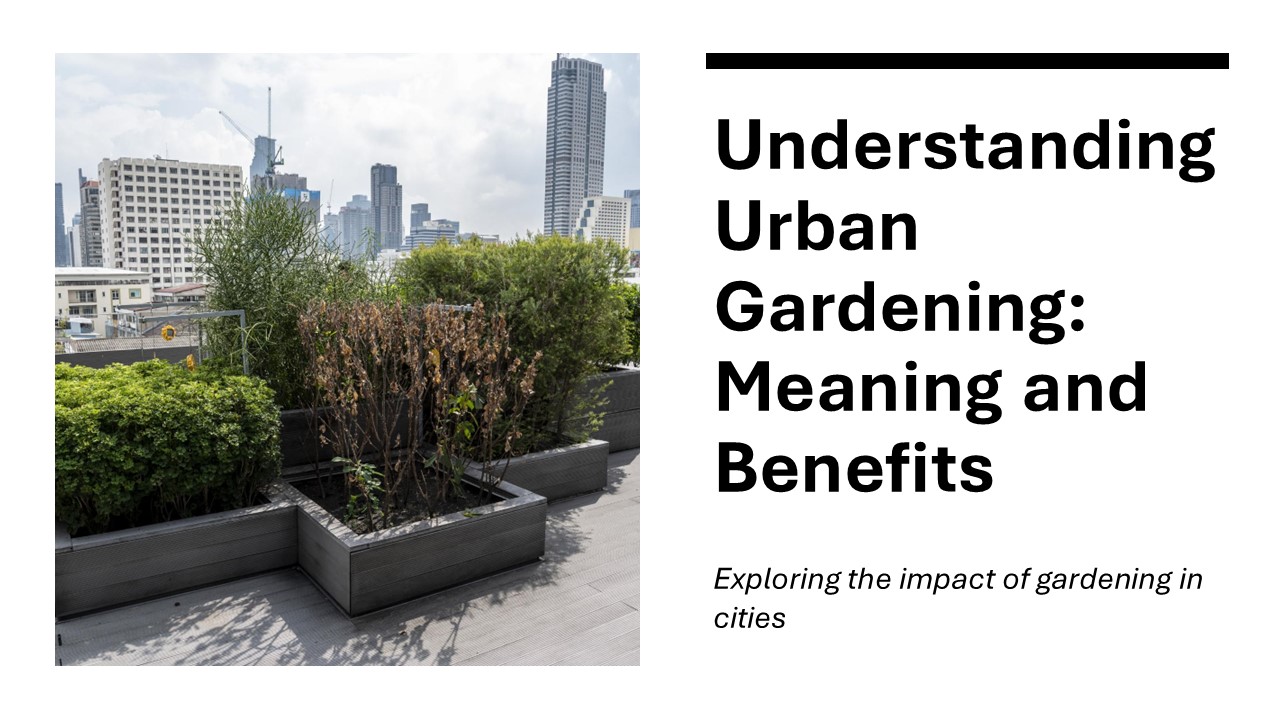
Title: Understanding Urban Gardening: Meaning and Benefits
1
Understanding Urban Gardening Meaning and
Benefits
- Exploring the impact of gardening in cities
2
Agenda Overview
- Definition and Concept of Urban Gardening
- Types of Urban Gardening
- Benefits of Urban Gardening
- Challenges in Urban Gardening
- Best Practices and Tips for Urban Gardening
3
Definition and Concept of Urban Gardening
4
Explanation of Urban Gardening
- Techniques of Urban Gardening
- Urban gardening includes various techniques such
as vertical gardening, container gardening, and
hydroponics to maximize limited space. - Food Production in Cities
- Urban gardening promotes food production by
allowing city residents to grow vegetables and
herbs in small spaces, enhancing food security. - Creating Green Spaces
- Urban gardening transforms unused areas into
vibrant green spaces, contributing to
environmental sustainability and improving urban
aesthetics.
5
Historical Background
- Victory Gardens
- Victory gardens were cultivated during World War
I and II to help supplement food supplies amid
shortages. - Evolution of Urban Gardening
- The concept has evolved from wartime gardens into
modern urban gardening initiatives that promote
sustainability and local food production.
6
Comparison with Traditional Gardening
- Space Utilization
- Urban gardening optimizes limited spaces by using
innovative techniques that traditional gardening
cannot accommodate. - Vertical Gardening
- Vertical gardening is a method that allows plants
to grow upwards, saving ground space while
enhancing aesthetics. - Container Gardening
- Container gardening enables urban dwellers to
grow plants in pots, making it easier to manage
limited spaces effectively.
7
Types of Urban Gardening
8
Container Gardening
- Growing in Small Spaces
- Container gardening is ideal for small spaces,
making it accessible to urban gardeners who want
to grow plants. - Variety of Plants
- This method allows for the cultivation of a
diverse range of plants including vegetables,
herbs, and flowers. - Benefits of Container Gardening
- Container gardening offers flexibility and
convenience, enabling gardeners to move plants as
needed and control soil quality.
9
Rooftop Gardening
- Creating Green Spaces
- Rooftop gardening transforms flat roofs into lush
green spaces, enhancing urban biodiversity and
aesthetics. - Maximizing Urban Space
- This innovative technique makes efficient use of
limited urban space by utilizing otherwise unused
rooftops. - Insulation Benefits
- Rooftop gardens help insulate buildings, reducing
energy costs and improving indoor comfort. - Stormwater Management
- They play a crucial role in managing stormwater
runoff, reducing flooding and pollution in urban
areas.
10
Community Gardens
- Shared Growing Spaces
- Community gardens provide shared spaces where
residents can collectively cultivate food and
enjoy gardening together. - Fostering Community Engagement
- These gardens encourage social interaction and
collaboration among local residents,
strengthening community bonds. - Promoting Healthy Eating
- Community gardens promote healthy eating by
providing access to fresh produce and educating
residents about nutrition.
11
Benefits of Urban Gardening
12
Environmental Benefits
- Improves Air Quality
- Urban gardening contributes to better air quality
by absorbing pollutants and releasing oxygen,
creating a healthier environment. - Reduces Urban Heat
- Gardens help lower urban temperatures by
providing shade and releasing moisture,
mitigating the urban heat island effect. - Promotes Biodiversity
- Urban gardens create habitats for various
species, promoting biodiversity and enhancing
ecological health in cities. - Carbon Sequestration
- Urban gardening aids in carbon sequestration,
helping to mitigate climate change by absorbing
CO2 from the atmosphere.
13
Health and Wellness Benefits
- Physical Activity
- Gardening involves physical activity that helps
improve fitness levels and overall health by
engaging various muscle groups. - Mental Well-being
- Gardening has therapeutic benefits that aid in
reducing stress and promoting mental relaxation,
enhancing overall well-being. - Healthy Eating Habits
- Urban gardening provides access to fresh produce,
which encourages healthier eating habits and
lifestyle choices.
14
Economic and Social Benefits
- Job Creation
- Urban gardening initiatives can create new job
opportunities in agriculture, landscaping, and
food production, benefiting the local economy. - Local Economic Boost
- These initiatives can stimulate local economies
by promoting the sale of fresh produce and
supporting local businesses. - Community Building
- Urban gardening enhances social interactions,
bringing people together and fostering a sense of
community and neighborhood ties.
15
Challenges in Urban Gardening
16
Space Limitations
- Urban Gardening Challenges
- Urban areas face significant space limitations
for traditional gardening, impacting residents'
access to green spaces. - Vertical Gardens
- Vertical gardens are an innovative solution to
gardening in limited spaces, maximizing vertical
surfaces for plant growth. - Utilizing Public Spaces
- Transforming underused public spaces into gardens
can enhance urban greenery and provide community
benefits.
17
Soil and Pollution Issues
- Challenges of Soil Quality
- Urban gardening often faces challenges related to
soil quality, significantly impacting the growth
of plants and food safety. - Pollution and Contamination
- Pollution and contamination can severely affect
soil health, necessitating careful management for
safe gardening practices. - Solutions Raised Beds
- Using raised beds can mitigate soil quality
issues by providing clean soil and preventing
contamination from the ground. - Container Gardening
- Container gardening is another effective solution
for urban gardeners dealing with poor soil
quality, ensuring food safety.
18
Regulatory and Policy Barriers
- Local Regulations
- Local regulations often impose restrictions on
gardening practices, limiting the ability to grow
food in urban areas. - Advocating Supportive Policies
- Advocating for policies that support urban
gardening can lead to positive changes and
greater access to gardening space. - Community Engagement
- Engaging the community is vital for removing
barriers to urban gardening and fostering a
supportive environment for local gardening
efforts.
19
Best Practices and Tips for Urban Gardening
20
Selecting Appropriate Plants
- Importance of Plant Selection
- Choosing the right plants is essential for the
success of urban gardening, ensuring both growth
and productivity. - Space Optimization
- Select plants that are compatible with limited
spaces, maximizing yield and minimizing
overcrowding in urban environments. - Biodiversity Encouragement
- Incorporating diverse plants in urban gardening
promotes biodiversity, benefiting both the
ecosystem and the garden's resilience. - Culinary Needs
- Consider plants that meet culinary needs,
ensuring that urban gardens provide fresh
ingredients for cooking.
21
Efficient Use of Space
- Vertical Gardening
- Vertical gardening allows for the cultivation of
plants in a compact space, maximizing the use of
limited urban areas. - Hanging Planters
- Hanging planters make use of vertical space and
can be a decorative way to grow herbs and flowers
in small areas. - Intercropping Techniques
- Intercropping involves growing multiple crops in
proximity, which can enhance biodiversity and
yield in small gardens.
22
Sustainable Gardening Techniques
- Composting Practices
- Composting is an effective way to recycle organic
waste and enrich soil health in urban gardens. - Rainwater Harvesting
- Rainwater harvesting systems can collect and
store rainwater for irrigation, promoting water
conservation in gardening. - Organic Gardening Methods
- Organic gardening utilizes natural processes and
materials, reducing chemical use and promoting
biodiversity in urban environments.
23
Conclusion
Recommended

