

Sinaia 9 Visiting Peles Castle2 PowerPoint PPT Presentation
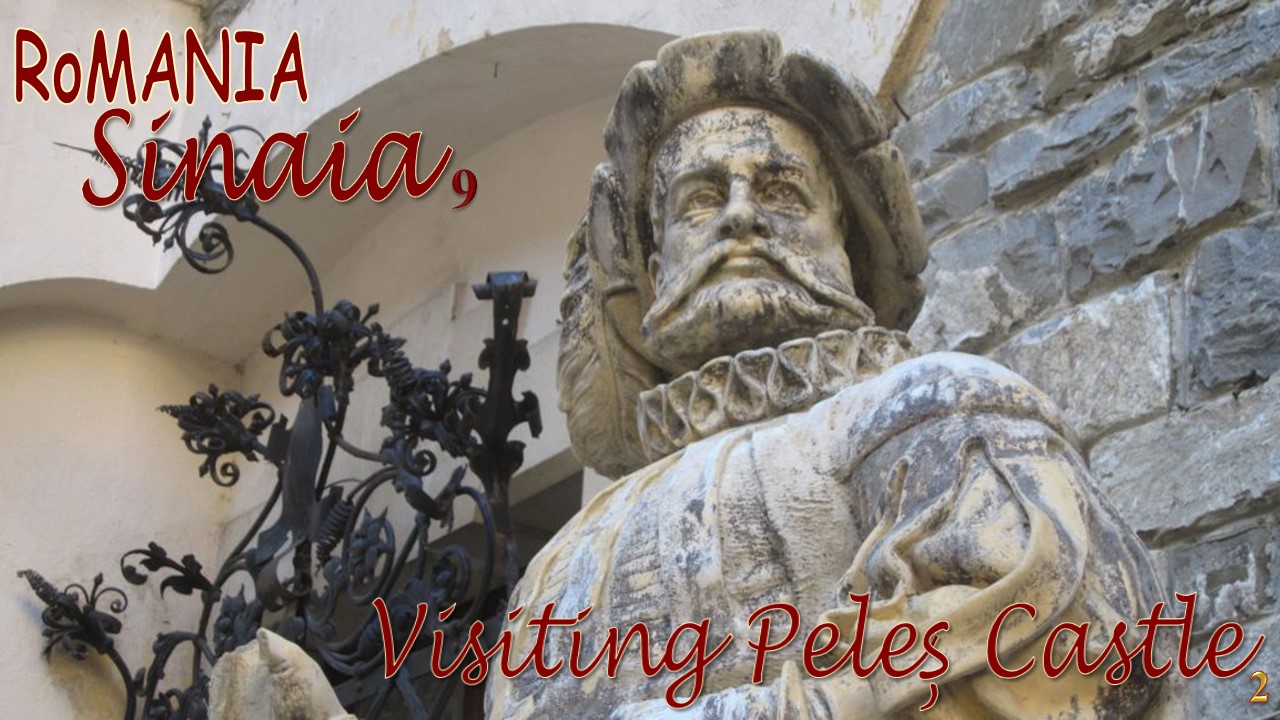
Title: Sinaia 9 Visiting Peles Castle2
1
RoMANIA
Sinaia
9
Visiting Pele? Castle
2
2
Internet image
Pele? Castle is a Neo-Renaissance castle in the
Carpathian Mountains, near Sinaia, in Romania.
This castle was used as a summer residence by the
kings of Romania. It was built at the wish of the
first Romanian king, Carol I (1866-1914).
Architects Wilhelm von Doderer (18721876),
Émile André Lecomte du Noüy (18901892), Karel
Liman (18961914) and was decorated by
J.D.Heymann from Hamburg, A.Bembe from Mainz and
Berhard Ludwig from Vienna, hence the similarity
to German castles
3
(No Transcript)
4
(No Transcript)
5
By form and function, Pele? is a palace, but it
is consistently called a castle. Built in
Neo-Renaissance architecture at the foot of the
Bucegi Mountains, Pele? Castle is one of the most
beautiful palaces in Europe. The castle was
declared a museum in 1953 but it was closed to
the public during the period between 1975-1990.
For the time, Pele? had very modern facilities.
The castle was extended to 160 rooms, several
entrances and staircases. The central tower
measures 66 meters, and besides the castle, two
smaller buildings were erected, Peli?or and
Foi?or
6
(No Transcript)
7
(No Transcript)
8
(No Transcript)
9
Turnul cel mare al castelului cu o înal?ime de 66
de metri a fost înal?at tot în anul 1906, un an
mai târziu fiind montat celebrul ceas cu trei
cadrane comandat special la Fabrica de ceasuri
turn a casei regale din Bavaria
10
(No Transcript)
11
Many statues are present on the seven Italian
neo-Renaissance terrace gardens. The gardens also
host fountains, urns, stairways, guarding lions,
marble paths, and other decorative pieces. It was
Sissi, the Empress of Austria who, after a visit
to Queen Elizabeth at her Castle of Sinaia, said
that she could not imagine anything more ideal
than the life and surroundings of Romania's
Carmen Sylva
12
Terasa de sud
13
Terasa cu busturi de împarati romani
14
Terrace with busts of Roman emperors
15
Statue by the Italian sculptor Raffaello
Romanelli (1856-1928)
16
Wounded Thracian and Dying Gal, the works of the
Florentine sculpture, Raffaello Romanelli, copies
on antique originals located in the Capitolin
Museum in Rome
17
The marble copy of The Dying Galatian, by
Raffaello Romanelli
Internet image
18
Internet image
Trac ranit, marmura de Carrara, Raffaello
Romanelli, 1908
19
Unul dintre tunurile folosite în razboiul de
independen?a
20
(No Transcript)
21
The Statue of Queen Elisabeth by Oscar Spaethe,
1911 on the eastern terrace of Peles Castle
22
Internet image
Elisabeth (1843-1916), Queen of Romania, aka
Carmen Sylva. Statue by Oscar Spaethe, 1911
23
In 1878 Romania won full independence from the
Ottoman Empire by treaty, and became a kingdom in
1881, with Carol I and Elizabeth crowned as the
first monarchs. Elizabeth (1843-1916) was not a
mere royal placeholder, but an interesting and
progressive woman. She was born in the
principality of Wied (Germany) to a prince and a
dukes daughter. Artistic, musical, gifted with
languages, and deeply drawn to literature,
Elizabeth began writing poetry at the age of 16.
She adopted the pen name Carmen Sylva (derived
from the Latin words for song and forest),
referring to her love of both music and the
woodlands of her birthplace.
24
(No Transcript)
25
One of Queen Elizabeth's other passions - the
arts of embroidery and lace is illustrated in
the NationaI Peles Museum through the inclusion
of a number of works of high artistic and
memorial value. An impressive work - first
exhibited at the Exposition Universelle in Paris
in 1900 is the baptism dress worn by Prince
Carol made from tatted lace in 1894 by Queen
Elizabeth using a weaving shuttle (made of solid
gold).
Internet image
The Peles Museum and the Japan Embassy in
Romania offered in 2012 for locals and tourists
in Sinaia several workshops on how to do handmade
lace using thread or silk shuttles. The workshops
was hosted by Japanese master Yusai Shokoin, who
teach the art of tatting one of the finest
handmade laces in the world.
26
(No Transcript)
27
The Art of Tatting (Arta de a lucra cu
suveica), scrisa de englezoaica Katherine Hoare,
în care apar piese lucrate de aceasta, dar si
dantelele reginei Elisabeta, precum ?i fotografii
cu suverana lucrând pe terasele Castelului
Peles. Cartea, pe a carei coperta se afla
scutecul de botez al lui Carol al II-lea, a fost
dedicata suveranei României, ale carei dragoste
si cunostinte artistice au avut un impact
deosebit asupra contemporanilor din diverse
categorii sociale si din diferite tari ale
lumii. Introducerea, scrisa de regina, constituie
un mesaj si un îndemn catre toate doamnele
pasionate si dornice sa învete acest mestesug
atât de drag ei
Internet image
28
(No Transcript)
29
The worlds first semipostal stamps, with a
surcharge (beyond the cost of postage) that was
designated for a charitable purpose, were issued
in New South Wales and Victoria in 1897. Romania,
however, was not too far behind, becoming the
first European country to issue semipostals, in
1906. Four sets containing four stamps each were
issued and the shared feature among the four sets
of stamps is Romanias Queen Elizabeth, consort
of King Carol I. Romanias 1906 semipostals
reflected queens interests. The first quartet
shows Elizabeth at a spinning wheel, wearing
Romanian traditional dress. At the foot of the
vignette is an irregular oval containing a
sentence in Elizabeths handwriting, with her
signature, a motif that is carried through all
four sets of stamps, but with a different motto
for each set. The sentence for this set
translates as God guide our hand. The queen is
shown weaving on the second set of stamps and the
quotation in the design is Woman weaves the
future of the country. One of Elizabeths
charities involved starting schools to teach
weaving using native hemp. The queen is depicted
nursing a wounded soldier on the third group of
stamps, with the quotation, The wounds dressed
and the tears wiped away. Elizabeth admired
Romanian crafts and costume and often wore
traditional folk clothing, making it a fashion
for the upper classes. In 1871, she founded her
first charitable society, distributing lavish
quantities of fuel annually to the poor. She gave
funds to begin a school of embroidery, to teach
peasant girls to read, write and embroider in the
Romanian traditional style. Having made folk
dress stylish, Elizabeth then encouraged her
friends to buy the embroidered products. The last
set is in elaborately art nouveau style, with
lavish ornamentation surrounding a large angel
hovering over either a child or a cherub,
accompanied by the saying, But glory, honor and
peace to all that do good.
30
(No Transcript)
31
Terasa Fântânii lui Apollo
32
(No Transcript)
33
The interior courtyard of Pele? castle
34
(No Transcript)
35
The interior courtyard of Pele? castle
36
(No Transcript)
37
(No Transcript)
38
(No Transcript)
39
The interior courtyard of Pele? castle
40
(No Transcript)
41
Halebardiers by Alexander Calandrelli (1834 -
1903), teracotta
42
(No Transcript)
43
(No Transcript)
44
(No Transcript)
45
Halebardier by Alexander Calandrelli (1834 -
1903), teracotta
46
(No Transcript)
47
(No Transcript)
48
Apollo fountain
49
(No Transcript)
50
(No Transcript)
51
The statue of King Carol I (1866-1914) by Oscar
Han overlooks the main entrance
52
(No Transcript)
53
(No Transcript)
54
(No Transcript)
55
(No Transcript)
56
(No Transcript)
57
(No Transcript)
58
Text Internet Pictures Sanda Foisoreanu
Daniela Iacob Internet All
copyrights belong to their respective owners
Presentation Sanda Foisoreanu
2018
Sound Radu Lupu - The Piano Concerto
No. 2 in B-flat major, Op. 19 (II), by Ludwig van
Beethoven
Recommended

