

Essential Skills for an MDS Coordinator PowerPoint PPT Presentation
Title: Essential Skills for an MDS Coordinator
1
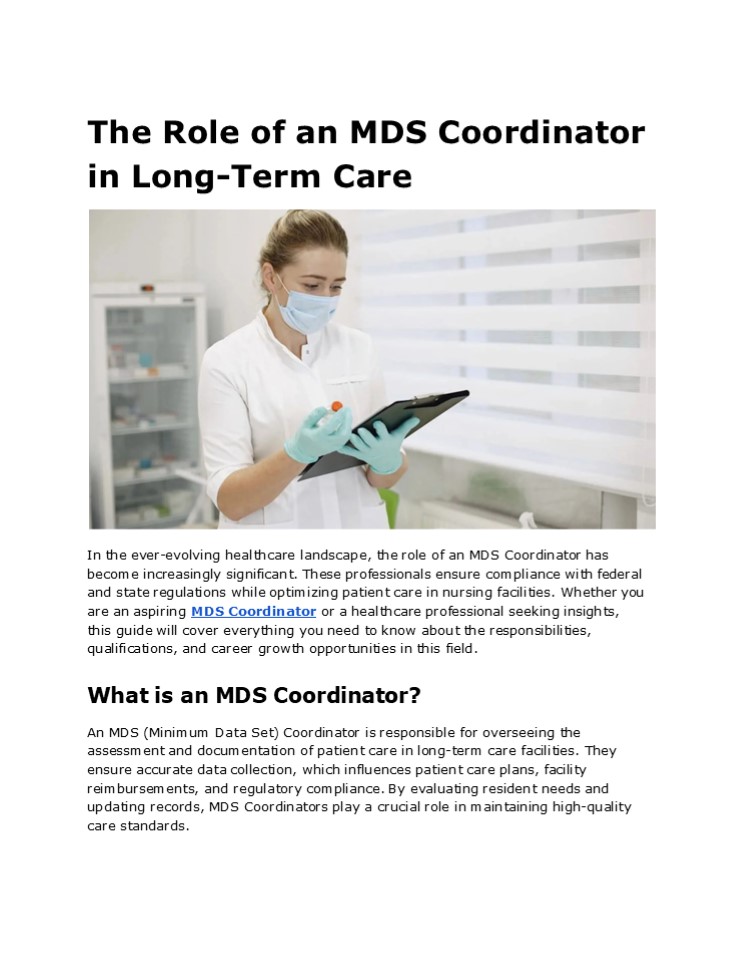
The Role of an MDS Coordinator in Long-Term Care
In the ever-evolving healthcare landscape, the
role of an MDS Coordinator has become
increasingly significant. These professionals
ensure compliance with federal and state
regulations while optimizing patient care in
nursing facilities. Whether you are an aspiring
MDS Coordinator or a healthcare professional
seeking insights, this guide will cover
everything you need to know about the
responsibilities, qualifications, and career
growth opportunities in this field. What is an
MDS Coordinator? An MDS (Minimum Data Set)
Coordinator is responsible for overseeing the
assessment and documentation of patient care in
long-term care facilities. They ensure accurate
data collection, which influences patient care
plans, facility reimbursements, and regulatory
compliance. By evaluating resident needs and
updating records, MDS Coordinators play a crucial
role in maintaining high-quality care standards.
2
Key Responsibilities of an MDS Coordinator
- Patient Assessments Conducting comprehensive
evaluations using the Minimum Data Set (MDS)
tool to assess residents physical and mental
health. - Data Accuracy and Compliance Ensuring
documentation aligns with federal and state
regulations, such as Medicare and Medicaid
requirements. - Care Plan Development Collaborating with
healthcare teams to create and update
individualized care plans based on assessment
findings. - Staff Coordination Working closely with nurses,
therapists, and other professionals to ensure
residents receive appropriate care. - Reimbursement Management Ensuring proper
documentation to support Medicare and Medicaid
claims, directly impacting facility funding. - Quality Improvement Identifying areas for
improvement in patient care and implementing
strategies to enhance overall service delivery.
- Skills and Qualifications Required
- To excel as an MDS Coordinator, professionals
must possess a combination of clinical expertise,
analytical skills, and attention to detail.
Common qualifications include - A valid Registered Nurse (RN) or Licensed
Practical Nurse (LPN) license - Experience in long-term or skilled nursing care
- Knowledge of the Resident Assessment Instrument
(RAI) process - Strong communication and leadership skills
- Proficiency in healthcare software and electronic
medical records (EMR)
Why Choose a Career as an MDS Coordinator?
3
- The demand for skilled MDS Coordinators continues
to grow as the healthcare industry places more
emphasis on quality assessments and regulatory
compliance. Some benefits of pursuing this career
include - Job Stability With an aging population,
long-term care facilities require skilled
professionals to manage resident assessments
efficiently. - Competitive Salary MDS Coordinators earn
attractive salaries, with potential for growth
based on experience and certifications. - Career Advancement Opportunities exist to
advance into leadership roles such as Director of
Nursing (DON) or healthcare administration. - Professional Satisfaction Playing a direct role
in improving patient care and facility operations
can be highly rewarding.
- Challenges Faced by MDS Coordinators
- Despite the numerous benefits of this career, MDS
Coordinators also face various challenges,
including - Regulatory Changes Constant updates to
healthcare policies and compliance requirements
demand continuous learning and adaptation. - Heavy Workload Managing multiple patient
assessments, care plans, and documentation can be
overwhelming. - Interdisciplinary Coordination Collaborating
with different healthcare professionals can
present communication and teamwork challenges. - Time Management Balancing daily
responsibilities while ensuring timely and
accurate data submission is crucial for success
in this role.
Steps to Becoming an MDS Coordinator 1. Obtain
Nursing Credentials Secure an RN or LPN license
through an accredited nursing program.
4
- Gain Experience Work in a long-term care
setting to develop familiarity with patient
assessments and documentation. - Complete MDS Training Enroll in MDS-specific
courses or certifications to enhance expertise
in the assessment process. - Get Certified Obtain certifications such as the
Resident Assessment Coordinator-Certified
(RAC-CT) credential to boost job prospects. - Apply for MDS Coordinator Positions Seek
employment in nursing homes, rehabilitation
centers, or skilled nursing facilities. - Best Practices for Success as an MDS Coordinator
- To thrive in this role, its essential to follow
best practices that promote efficiency and
effectiveness - Stay Updated on Regulations Regularly review
industry updates and participate in continuing
education courses. - Improve Time Management Develop a structured
workflow to balance assessments, documentation,
and team collaboration. - Strengthen Communication Skills Maintain clear
and open communication with nursing staff,
therapists, and other healthcare professionals. - Leverage Technology Utilize healthcare software
solutions to streamline data collection and
improve accuracy.
Future Outlook for MDS Coordinators With the
increasing emphasis on quality patient care and
regulatory compliance, the demand for MDS
Coordinators is expected to rise. Advancements in
healthcare
5
technology, electronic documentation, and
data-driven decision-making will further shape
the role, making it a promising career choice for
those interested in long-term care
management. Conclusion The role of an MDS
Coordinator is integral to maintaining
high-quality care standards in long-term care
facilities. By ensuring accurate patient
assessments and regulatory compliance, these
professionals contribute to both
resident well-being and facility success. If you
are considering a career as an MDS Coordinator,
now is the perfect time to step into this
rewarding field and make a meaningful impact in
healthcare. With the right skills, training, and
dedication, you can thrive in this essential role
and play a key part in shaping the future
of long-term care.
Recommended

