

How to Create a Comprehensive Fire Life Safety Plan for Commercial Buildings PowerPoint PPT Presentation
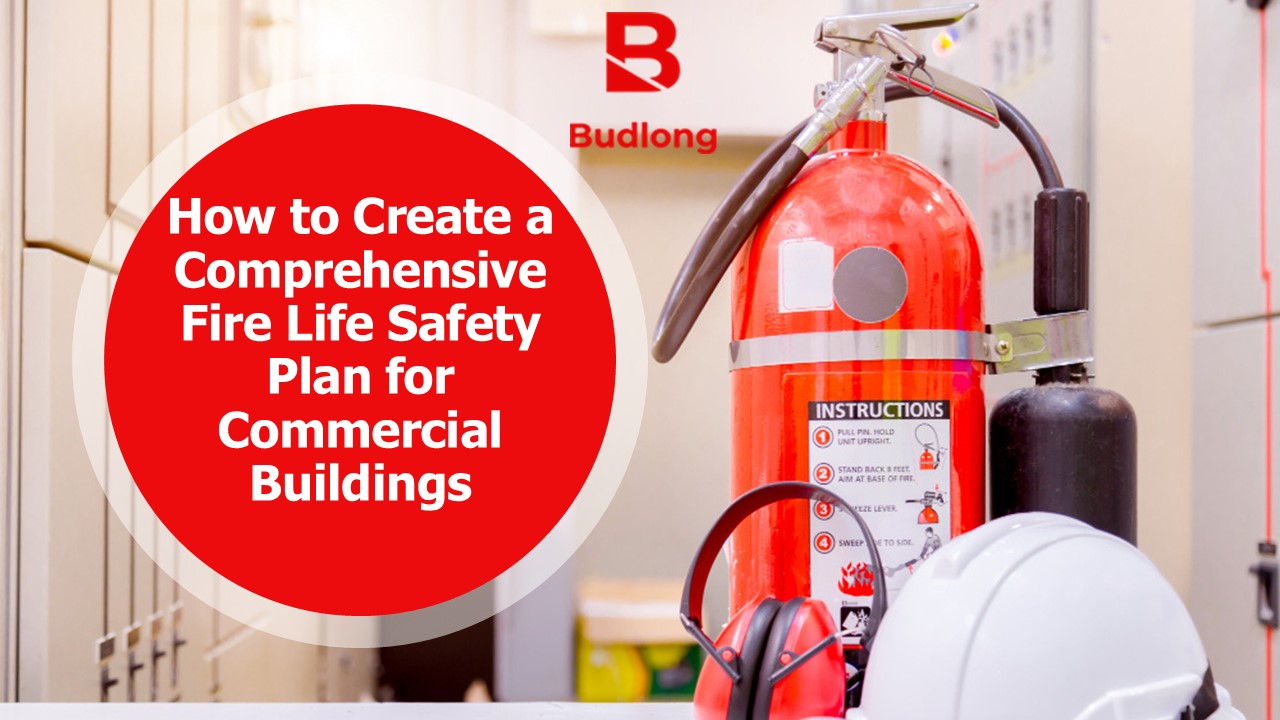
Title: How to Create a Comprehensive Fire Life Safety Plan for Commercial Buildings
1
How to Create a Comprehensive Fire Life Safety
Plan for Commercial Buildings
2
In commercial buildings, a robust fire life
safety plan is not only a regulatory requirement
but a critical tool for protecting lives,
property, and investments. Developing an
effective plan requires careful planning,
training, and adherence to fire safety
regulations. This guide outlines the essential
steps in creating a comprehensive fire life
safety plan, from initial risk assessment to
compliance with safety codes.
3
1. A Fire Life Safety Plan, what is it and why it
is important
Definition and Importance
The fire life safety plan (FLSP) is the formal
document explaining the precautionary measures
and emergency action evacuation strategies to
protect the occupants of a building and the
facilities within it, from fire hazards. Its
more than a law to be fulfilled rather, it is an
evaluation of fire risks pertinent to the
buildings features, such as its design, type,
and purpose.
4
Benefits
In a way, an FLSP can avert possible risks, loss
to fire destruction, and risk level immensely.
After all, it addresses broad policy goals to
reduce the incidence of workplace injuries by
ensuring fire safety compliance and reduces the
risk of gantries and increases tenants
confidence and employees confidence in workplace
safety.
5
2. Important elements of a Fire Life Safety Plan
a. Risk Assessment
A building fire risk assessment is an absolute
first step. Therefore, a fire risk assessment
analysis aims to assess and broadens the concerns
and associated factors with the building fire
hazard. This covers such aspects such as
construction materials, building use occupancy
volume, and current building fire protection
systems. Risk assessments being achieved
regularly assist in pinpointing the high-order
issues that would require more fire safety
preparedness and strategies on the FLSP to be
effective for that particular structure.
6
b. Fire Alarm and Detection Systems
It is important to have proper fire detection
alarm systems incorporated in the buildings for
fast action in the case of fire. Integrate the
systems with the specific parameters of the
building in question such as smoke detectors,
heat sensors, and automated alarms. These systems
need to be tested and maintained regularly to
eliminate chances of false alarm or a fire that
is undetected putting the occupants in peril.
7
c. Fire Suppression Systems
Active fire suppression such as sprinklers and
chemical fire suppressants are also part of the
firefighter equipment as they limit fires until
response teams arrive. There are some types of
sprinklers which can be used in most commercial
buildings but due to risk factor, others like
computer centres or chemical storages would rely
on chemical suppressants. Pick the appropriate
suppression system in accordance with the
outcomes of the risk assessment and the relevant
regulative requirements.
8
d. Emergency Evacuation Procedures
In order to maximize safety for the people,
appropriate strategies have to be devised to
avoid commotion while evacuating the building
during times of a fire emergency. The escape
route map should also include all exits, the
target assembly points and safe zones which will
assist in developing a detailed route around the
building in case theres a fire. Such route maps
need to be placed at prominent locations in the
entire building e.g. elevators, and staircases
and make it necessary for employees to keep
abreast of the nearest exit and assembly point.
9
3. Implementing Protocols and Responsibilities
for Emergency Situations
Roles Assigning
Define crisis roles in advance to enable an
efficient emergency response. For instance, there
about fire wardens who are tasked to ensure that
all employees are guided to safety and all are
out of the building and in case there is need
even to call the emergency services. Appoint
emergency positions like floor marshals or floor
coordinators to manage evacuation at each of the
buildings floors.
10
Fire drills and communication
Learning from past fire incidents and conducting
fire drills on a regular basis helps to prepare
and expose weaknesses in the current evacuation
efforts. Staff members are able to conduct fire
drills that are either quarterly or
semi-annually. Set up ways of informing about any
emergency situations against fires to allow fast
communication and timely interventions during
fire outbreaks.
11
4. Adherence to the Standards, Principles and
Codes of Fire Life Safety
Governing Fire Codes
Integrating fire codes and standards as provided
for by National Fire Protection Association
(NFPA) is essential for safe building
construction. There are specific fire codes such
as NFPA 101 (Life Safety Code) and NFPA 13
(Standard for Installation of Sprinkler Systems)
which specify requirements undertaking fire
safety measures.
12
Regular Audits and Code Compliances
Conduct regular fire code compliance inspections
at all levels local, state and federal. Some
codes may change from time to time but if all
proper codes are adhered to, the chances of
hazards are minimized. This policy shall
additionally aid in the analysis of deterioration
that requires repair on the fire systems and
therefore, the FLSP would be enhanced.
13
Conclusion
Creating a comprehensive fire life safety plan
for a commercial building is a thorough process
that covers risk assessments, emergency
protocols, and adherence to safety codes. By
prioritizing a well-rounded approach to fire life
safety, building owners and property managers can
protect lives, reduce financial loss, and build a
culture of safety. This proactive investment not
only meets regulatory requirements but also
reinforces the buildings reputation as a safe
and secure environment for all occupants.
14
Contact Us
(818) 638-8780
info_at_budlong.com
www.budlong.com
Recommended

