

John Deere SP.6 Dgps-Ready Operator’s Manual Instant Download PowerPoint PPT Presentation
Title: John Deere SP.6 Dgps-Ready Operator’s Manual Instant Download
1
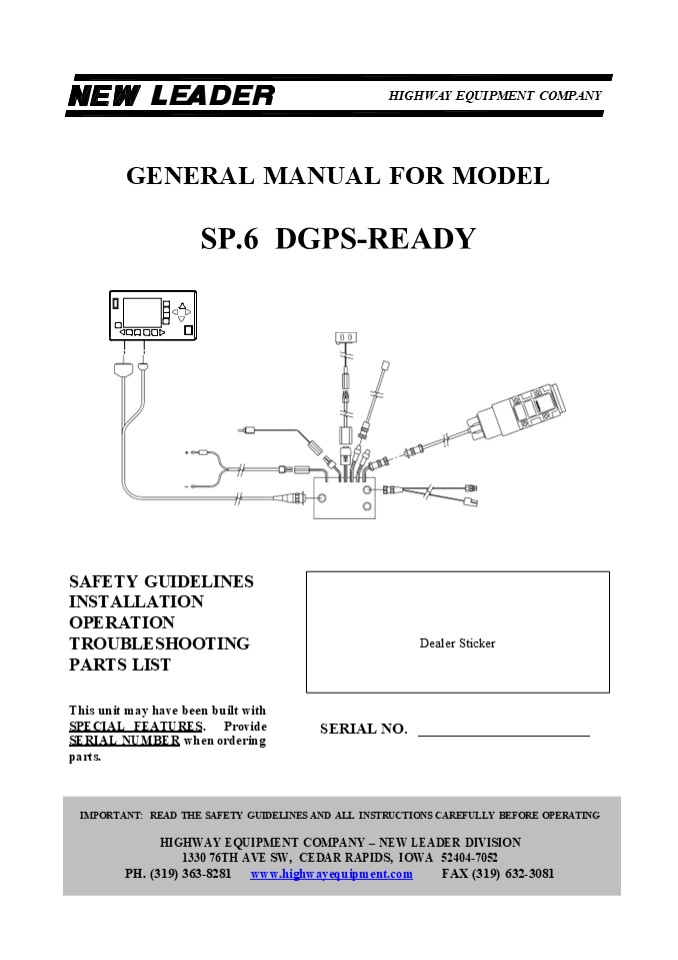
SP.6 DGPS-READY
HIGHWAY EQUIPMENT COMPANY
GENERAL MANUAL FOR MODEL
SAFETY GUIDELINES INSTALLATION OPERATION
TROUBLESHOOTING PARTS LIST
Dealer Sticker
This unit may have been built with
SPECIAL FEATURES. Provide
SERIAL NO.
SERIAL NUMBER when ordering parts.
IMPORTANT READ THE SAFETY GUIDELINES AND ALL
INSTRUCTIONS CAREFULLY BEFORE OPERATING HIGHWAY
EQUIPMENT COMPANY NEW LEADER DIVISION 1330 76TH
AVE SW, CEDAR RAPIDS, IOWA 52404-7052 PH. (319)
363-8281 www.highwayequipment.com FAX (319)
632-3081
2
Group 05 Safety
210 05 1
Recognize Safety Information
This is a safety-alert symbol. When you see this
symbol on your machine or in this manual, be
alert to the potential for personal
injury. Follow recommended precautions and safe
operating practices.
LM46481,0000470 1902NOV041/1
Understand Signal Words A signal wordDANGER,
WARNING, or CAUTIONis used with the safety-alert
symbol. DANGER identifies the most serious
hazards. DANGER or WARNING safety signs are
located near specific hazards. General
precautions are listed on CAUTION safety signs.
CAUTION also calls attention to safety messages
in this manual. LM46481,0000471 1902NOV041/1
Follow Safety Instructions Carefully read all
safety messages in this manual and on your
machine safety signs. Keep safety signs in good
condition. Replace missing or damaged safety
signs. Be sure new equipment components and
repair parts include the current safety signs.
Replacement safety signs are available from your
John Deere dealer. Learn how to operate the
machine and how to use controls properly. Do not
let anyone operate without instruction. Keep
your machine in proper working condition.
Unauthorized modifications to the machine may
impair the function and/or safety and affect
machine life. If you do not understand any part
of this manual and need assistance, contact your
John Deere dealer. LM46481,0000472
1902NOV041/1
210-05-1
4720 Self-Propelled Sprayer Diagnosis and
Tests 092805 PN7
TM2230 (01NOV05)
3
210 05 2
Use Proper Tools Use tools appropriate to the
work. Makeshift tools and procedures can create
safety hazards. Use power tools only to loosen
threaded parts and fasteners. For loosening and
tightening hardware, use the correct size tools.
DO NOT use U.S. measurement tools on metric
fasteners. Avoid bodily injury caused by slipping
wrenches. Use only service parts meeting John
Deere specifications. DX,REPAIR
1917FEB991/1
Replace Safety Signs Replace missing or damaged
safety signs. See the machine operator's manual
for correct safety sign placement. DX,SIGNS
1 1904JUN901/1
Prevent Machine Runaway Avoid possible injury or
death from machinery runaway. Do not start
engine by shorting across starter terminals.
Machine will start in gear if normal circuitry is
bypassed. NEVER start engine while standing on
ground. Start engine only from operator's seat,
with transmission in neutral or
park. LM46481,0000473 1902NOV041/1
210-05-2
4720 Self-Propelled Sprayer Diagnosis and
Tests 092805 PN8
TM2230 (01NOV05)
4
https//www.ebooklibonline.com Hello dear
friend! Thank you very much for reading. Enter
the link into your browser. The full manual is
available for immediate download. https//www.ebo
oklibonline.com
5
Use Seat Belt Properly 210 05 3
Use a seat belt when you operate with a roll-over protective structure (ROPS) or cab to minimize chance of injury from an accident such as an overturn. Do not use a seat belt if operating without a ROPS or cab. Replace entire seat belt if mounting hardware, buckle, belt, or retractor show signs of damage. Inspect seat belt and mounting hardware at least once a year. Look for signs of loose hardware or belt damage, such as custs, fraying, extreme or unusual wear, discoloration, or abrasion. Replace only with replacement parts approved for your machine. See your John Deere dealer. LM46481,0000474 1902NOV041/1
Operate Safely DO NOT start engine with
Multifunction Control Handle engaged. DO NOT
operate close to a ditch or creek.
Always shut off engine when leaving machine.
Remove key when leaving machine unattended. Park
brake will engage when engine is turned off
regardless of Multifunction Control Handle
position.
DO NOT fold or unfold boom near overhead wires.
Keep hands, feet and clothing away from moving
parts.
Always come to a complete stop before
reversing directions. Wear relatively tight and
belted clothing to prevent from being caught on
some part of the machine. Drive slowly over rough
ground. Slow down when turning.
LM46481,0000475 1902NOV041/1
210-05-3
4720 Self-Propelled Sprayer Diagnosis and
Tests 092805 PN9
TM2230 (01NOV05)
6
210 05 4
- Remove Paint Before Welding or Heating
- Avoid potentially toxic fumes and dust.
- Hazardous fumes can be generated when paint is
heated by welding, soldering, or using a torch. - Remove paint before heating
- Remove paint a minimum of 100 mm (4 in.) from
area to be affected by heating. If paint cannot
be removed, wear an approved respirator before
heating or welding. - If you sand or grind paint, avoid breathing the
dust. Wear an approved respirator. - If you use solvent or paint stripper, remove
stripper with - soap and water before welding. Remove solvent or
paint stripper containers and other flammable
material from area. Allow fumes to disperse at
least 15 minutes before welding or heating. - Do not use a chlorinated solvent in areas where
welding will take place. - Do all work in an area that is well ventilated to
carry toxic fumes and dust away. - Dispose of paint and solvent properly.
Avoid Heating Near Pressurized Fluid
Lines Flammable spray can be generated by heating
near pressurized fluid lines, resulting in severe
burns to yourself and bystanders. Do not heat by
welding, soldering, or using a torch near
pressurized fluid lines or other flammable
materials. Pressurized lines can be accidentally
cut when heat goes beyond the immediate flame
area. LM46481,0000477 1902NOV041/1
210-05-4
4720 Self-Propelled Sprayer Diagnosis and
Tests 092805 PN10
TM2230 (01NOV05)
7
210 05 5
Handle Starting Fluid Safely
Starting fluid is highly flammable. Keep all
sparks and flame away when using it. Keep
starting fluid away from batteries and
cables. To prevent accidental discharge when
storing the pressurized can, keep the cap on the
container, and store in a cool, protected
location. Do not incinerate or puncture a
starting fluid container.
DX,FIRE3 1916APR921/1
Beware of Exhaust Fumes Prevent asphyxiation.
Engine exhaust fumes can cause sickness or death
to you or others. If you must operate in a
building, be positive there is adequate
ventilation. Use an exhaust pipe extension to
remove the exhaust fumes or open doors and
windows to bring enough outside air into the
area. LM46481,0000478 1902NOV041/1
Keep Riders Off Machine Only allow the operator
on the machine. Keep riders off. Riders on
machine are subject to injury such as being
struck by foreign objects and being thrown off of
the machine. Riders also obstruct the operator's
view resulting in the machine being operated in
an unsafe manner. LM46481,0000479
1902NOV041/1
210-05-5
4720 Self-Propelled Sprayer Diagnosis and
Tests 092805 PN11
TM2230 (01NOV05)
8
210 05 6
Handle Fuel SafelyAvoid Fires Handle fuel with
care it is highly flammable. Do not refuel the
machine while smoking or when near open flame or
sparks. Always stop engine before refueling
machine. Fill fuel tank outdoors. Prevent fires
by keeping machine clean of accumulated trash,
grease, and debris. Always clean up spilled
fuel. LM46481,000047A 1902NOV041/1
Prepare for Emergencies Be prepared if a fire
starts. Keep a first aid kit and fire
extinguisher handy. Keep emergency numbers for
doctors, ambulance service, hospital, and fire
department near your telephone. LM46481,000047
B 1902NOV041/1
Wear Protective Clothing Wear close fitting
clothing and safety equipment appropriate to the
job. Operating equipment safely requires the
full attention of the operator. Do not wear radio
or music headphones while operating
machine. LM46481,000047C 1902NOV041/1
210-05-6
4720 Self-Propelled Sprayer Diagnosis and
Tests 092805 PN12
TM2230 (01NOV05)
9
Suggest For more complete manuals. Please go to
the home page. https//www.ebooklibonline.com If
the above button click is invalid. Please
download this document first, and then click the
above link to download the complete manual. Thank
you so much for reading
10
210 05 7
Protect Against Noise
Prolonged exposure to loud noise can cause
impairment or loss of hearing. Wear a suitable
hearing protective device such as earmuffs or
earplugs to protect against objectionable or
uncomfortable loud noises.
LM46481,000047D 1902NOV041/1
- Prevent Acid Burns
- Sulfuric acid in battery electrolyte is
poisonous. It is strong enough to burn skin, eat
holes in clothing, and cause blindness if
splashed into eyes. - Avoid the hazard by
- Filling batteries in a well-ventilated area.
- Wearing eye protection and rubber gloves.
- Avoiding breathing fumes when electrolyte is
added. - Avoiding spilling or dripping electrolyte.
- Use proper jump start procedure.
- If you spill acid on yourself
- Flush your skin with water.
- Apply baking soda or lime to help neutralize the
acid. - Flush your eyes with water for 1530 minutes. Get
medical attention immediately. - If acid is swallowed
210-05-7
4720 Self-Propelled Sprayer Diagnosis and
Tests 092805 PN13
TM2230 (01NOV05)
11
210 05 8
Handle Agricultural Chemicals Safely
- Chemicals used in agricultural applications such
as fungicides, herbicides, insecticides,
pesticides, rodenticides, and fertilizers can be
harmful to your health or the environment if not
used carefully. - Always follow all label directions for effective,
safe, and legal use of agricultural chemicals. - Reduce risk of exposure and injury
- Wear appropriate personal protective equipment as
recommended by the manufacturer. In the absence
of manufacturer's instructions, follow these
general guidelines - Chemicals labeled Danger Most toxic. Generally
require use of goggles, respirator, gloves, and
skin - protection.
- Chemicals labeled Warning Less toxic.
Generally require use of goggles, gloves, and
skin protections. - Chemicals labeled Caution Least toxic.
Generally - require use of gloves and skin protection.
- Avoid inhaling spray or dusts.
- Always have soap, water, and towel available when
working with chemicals. If chemical contacts
skin, hands, or face, wash immediately with soap
and water. If chemical gets into eyes, flush
immediately with water. - Wash hands and face after using chemicals and
before eating, drinking, smoking, or urination. - Do not smoke or eat while applying chemicals.
- After handling chemicals, always bathe or shower
and change clothes. Wash clothing before wearing
again. - Seek medical attention immediately if illness
occurs during or shortly after use of checmials. - Keep chemicals in original containers. Do not
transfer chemicals to unmarked containers or to
containers used for food or drink.
LM46481,000047F 1902NOV041/1
210-05-8
4720 Self-Propelled Sprayer Diagnosis and
Tests 092805 PN14
TM2230 (01NOV05)
12
https//www.ebooklibonline.com Hello dear
friend! Thank you very much for reading. Enter
the link into your browser. The full manual is
available for immediate download. https//www.ebo
oklibonline.com
Recommended

