

Best Practices for Handling and Transporting Cryogenic Dewars (1) PowerPoint PPT Presentation
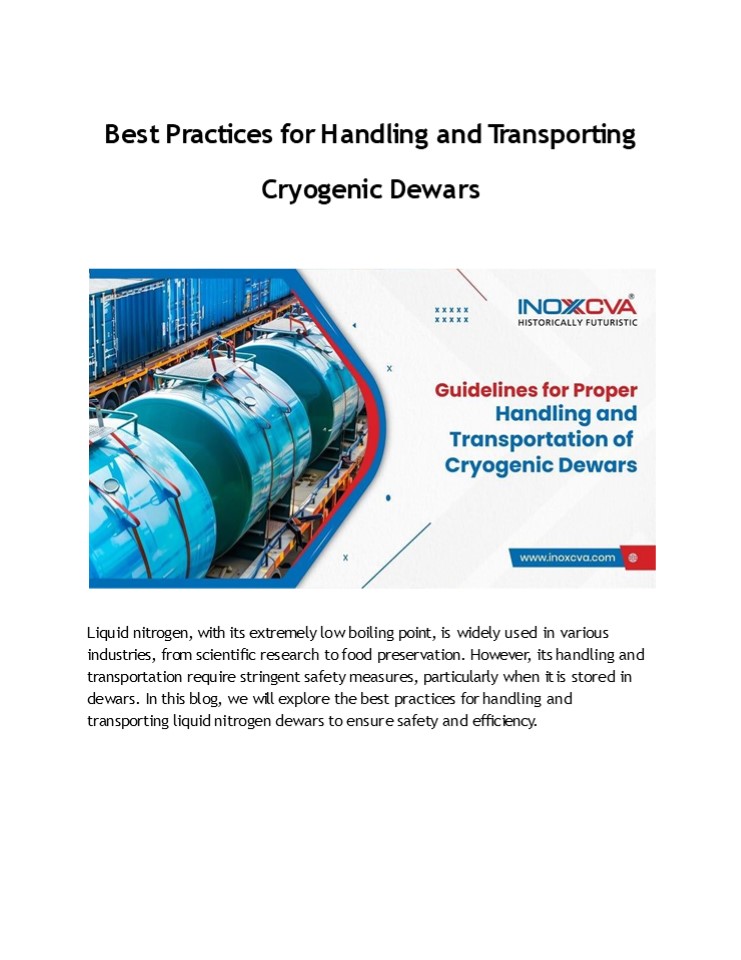
Title: Best Practices for Handling and Transporting Cryogenic Dewars (1)
1
Best Practices for Handling and
Transporting Cryogenic Dewars
Liquid nitrogen, with its extremely low boiling
point, is widely used in various industries,
from scienti?c research to food preservation.
However, its handling and transportation require
stringent safety measures, particularly when it
is stored in dewars. In this blog, we will
explore the best practices for handling and
transporting liquid nitrogen dewars to ensure
safety and e?ciency.
2
Liquid Nitrogen Dewars
Liquid nitrogen dewars are double-walled,
vacuum-insulated containers speci?cally designed
to store and transport cryogenic liquids. The
insulation between the walls minimizes heat
transfer, allowing the liquid nitrogen inside to
remain at its ultra-low temperature. These dewars
come in various sizes, from small portable
models to large stationary units, and are
equipped with features such as pressure relief
valves, handles, and wheels to facilitate safe
handling.
Liquid Nitrogen Dewars can maintain cryogenic
temperatures of -196C or -321F Interesting?
Learn More
3
Safety Precautions for Handling Liquid Nitrogen
Dewars The handling of liquid nitrogen dewars
must be conducted with extreme care due to the
potential hazards associated with cryogenic
liquids. Below are essential safety precautions
to consider.
Personal Protective Equipment (PPE) Always wear
appropriate PPE, including cryogenic gloves,
safety goggles, face shields, and lab coats.
This gear protects against frostbite and cold
burns that can occur from direct contact with
liquid nitrogen or its vapors. Proper
Ventilation Liquid nitrogen rapidly expands to
700 times its liquid volume when it vaporizes,
potentially displacing oxygen in the air and
creating an asphyxiation hazard. Ensure that the
area where liquid nitrogen is handled is
well-ventilated to prevent oxygen de?ciency.
4
Handling Procedures When pouring liquid nitrogen
from one dewar to another, do so slowly to
minimize splashing and thermal shock, which can
cause the dewars to crack or explode. Use
transfer hoses and dispensing equipment designed
for cryogenic liquids to reduce
spillage. Avoiding Trapped Liquid Never seal
liquid nitrogen in a container without a pressure
relief mechanism. As liquid nitrogen evaporates,
it builds up pressure inside the container, which
can lead to an explosion if not properly
vented. Best Practices for Transporting Liquid
Nitrogen Dewars Transporting liquid nitrogen
requires careful planning and adherence to
speci?c guidelines to prevent accidents. Here
are some key considerations.
5
Secure Dewars Properly During transportation,
ensure that dewars are securely fastened to
prevent tipping or rolling. Use appropriate
straps, brackets, or cages to hold the dewar in
place. For larger dewars, use trolleys or carts
designed for cryogenic containers to facilitate
safe movement. Use Approved Vehicles Transport
liquid nitrogen dewars in vehicles speci?cally
designed or approved for carrying cryogenic
materials. These vehicles should be
well-ventilated and equipped with appropriate
signage indicating the presence of hazardous
materials. Avoid Con?ned Spaces Do not transport
liquid nitrogen in the passenger compartment of a
vehicle, as nitrogen gas buildup could lead to
oxygen de?ciency and pose a su?ocation risk.
Always use an open bed or a well-ventilated cargo
area. Regulatory Compliance Adhere to local and
international regulations governing the
transportation of hazardous materials. This
includes proper labeling, documentation, and
following speci?c routes if required. Emergency
Preparedness Ensure that personnel involved in
the transportation of liquid nitrogen are trained
in emergency response procedures. Carry
appropriate spill kits, ?rst aid supplies, and
emergency contact numbers. In case of an
incident, evacuate the area immediately and
contact emergency services.
6
Common Mistakes to Avoid When Handling Nitrogen
Dewars When handling and transporting liquid
nitrogen dewars, several common mistakes can
lead to accidents or equipment damage. Avoid the
following pitfalls. Always adhere to the
recommended ?ll level. Over?lling a dewar can
lead to liquid nitrogen spilling out during
transportation or handling, increasing the risk
of exposure. Use containers that are speci?cally
designed for cryogenic liquids. Ordinary
containers can crack or explode due to the
extreme cold, leading to dangerous
spills. Regularly inspect dewars for signs of
wear and tear, such as cracks, leaks, or
malfunctioning pressure relief valves. Proper
maintenance ensures that the dewar functions
correctly and safely. Store liquid nitrogen
dewars in a well-ventilated area away from heat
sources and direct sunlight. Keep the dewar
upright and ensure that it is not exposed to
mechanical shock or vibration, which could damage
the insulation. Environmental and Health
Considerations While liquid nitrogen itself is
not toxic, its handling and transportation can
have environmental and health implications if
not managed properly. The rapid evaporation of
liquid nitrogen can displace oxygen in the
surrounding area, creating an asphyxiation risk
for humans and animals. Additionally, the
improper disposal of nitrogen gas can contribute
to environmental concerns, particularly in
enclosed or poorly ventilated areas. To mitigate
these risks, always handle and dispose of liquid
nitrogen responsibly. Vent nitrogen gas in a
safe, open area, and avoid releasing it into
con?ned spaces. Properly trained personnel
should conduct all handling and disposal
procedures to minimize environmental impact and
ensure the safety of everyone involved.
7
The proper handling and transportation of liquid
nitrogen dewars are critical to ensuring the
safety of personnel and the integrity of the
cryogenic material. By following the outlined
safety precautions, and best practices, and
avoiding common mistakes, you can e?ectively
manage the risks associated with liquid
nitrogen. Remember, liquid nitrogen is a
valuable tool in many industries, but its safe
use depends on rigorous adherence to safety
protocols and best practices. Ensure that all
personnel are properly trained and equipped, and
always stay updated on the latest safety
guidelines and regulations to keep your
operations running smoothly and safely. INOXCVA
is one of the largest manufacturers of both
standard and customized cryogenic equipment,
designed for the storage, distribution, and
transfer of cryogens across the entire cryogenic
temperature range. With over 30 years of
experience, we are proud to be one of the worlds
leading cryogenic tanks manufacturers. Get in
touch with us if you are looking for reliable
cryogenic tanks or need service support in
handling any of our cryogenic equipment.
Recommended

