

Million Dollar Mistake: Are You Missing Out on Wound Care Reimbursements? PowerPoint PPT Presentation
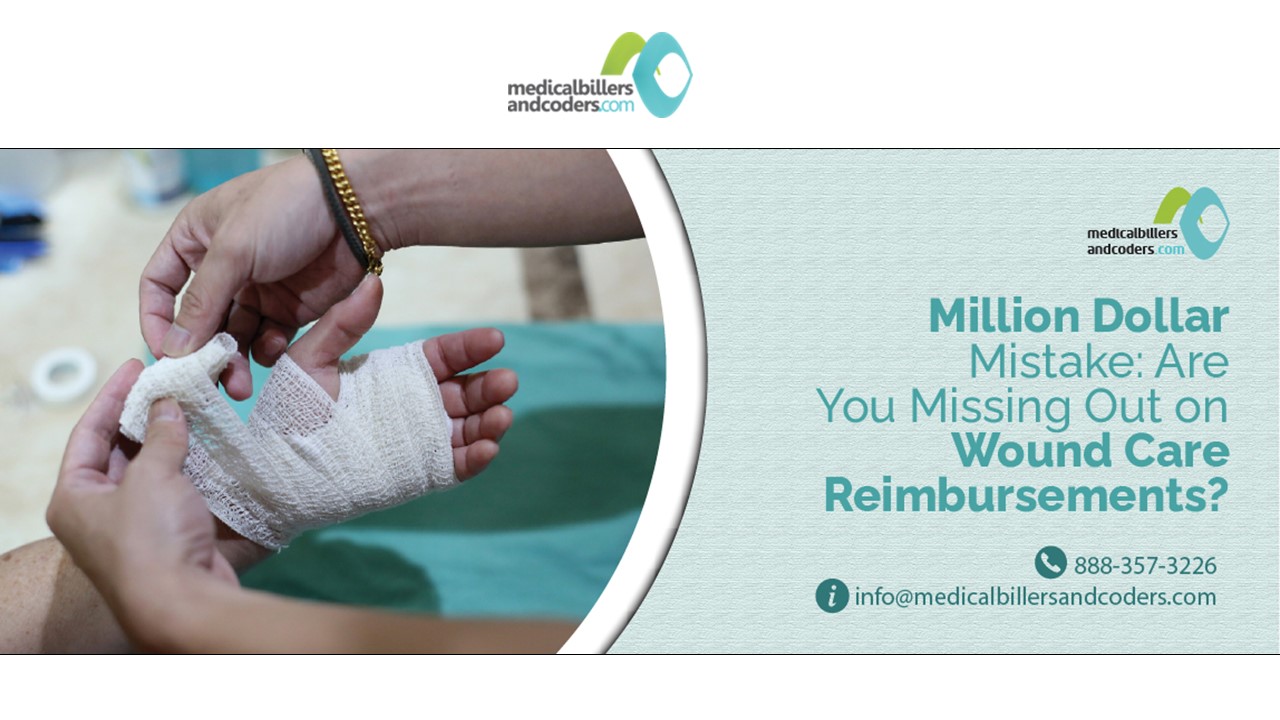
Title: Million Dollar Mistake: Are You Missing Out on Wound Care Reimbursements?
1
(No Transcript)
2
Million Dollar Mistake Are You Missing Out on
Wound Care Reimbursements?
Missing Wound Care Reimbursements A Threat to
Your Practice In the complex world of medical
billing, it is all too easy to overlook
opportunities for reimbursementespecially in
specialized fields like wound care. For wound
care practices, ensuring accurate wound care
reimbursements can be the difference between a
thriving practice and missed revenue. Are you
missing out on wound care reimbursements due to
common billing mistakes? Worry not! This article
delves into the basics of wound care billing,
common errors, and effective strategies to
optimize your Revenue Cycle Management
(RCM). Understanding Wound Care Billing Wound
care billing involves the meticulous
documentation and coding of procedures related to
the treatment of various wounds. This includes
everything from chronic and surgical wounds to
diabetic ulcers. The key to successful wound
care billing lies in understanding the specific
codes and regulations that govern this niche.
3
Million Dollar Mistake Are You Missing Out on
Wound Care Reimbursements?
- Key Components of Wound Care Billing
- 1. Accurate Documentation Comprehensive and
precise documentation is crucial. This includes
details of the wound type, size, depth, treatment
methods, and follow-up care. - 2. Appropriate Coding Utilizing the correct CPT
(Current Procedural Terminology) and ICD-10
(International Classification of Diseases) codes
is essential to avoid claim denials. - Common CPT Codes for Wound Care
- 11042-11047 Cover debridement of skin and
subcutaneous tissue based on wound size and
complexity.
4
Million Dollar Mistake Are You Missing Out on
Wound Care Reimbursements?
- 15002-15431 For applying skin substitute grafts.
- 12001-13160 Encompass various wound repair
procedures. - 99201-99499 For evaluation and management
services. - 99183 Used for reporting hyperbaric oxygen
therapy. - 3. Timely Submission Ensure that claims are
submitted promptly to meet insurance deadlines
and avoid delays in reimbursement. - 3 Common Mistakes in Wound Care Billing that
Impact Reimbursements - Inaccurate Coding Incorrect use of codes can
lead to claim denials or reduced reimbursements.
It is important to stay updated with coding
changes and guidelines. - Incomplete Documentation Insufficient
documentation can result in denied claims. Always
include detailed notes on the wounds condition
and the treatment provided. - Lack of Follow-Up Failure to track and follow up
on submitted claims can lead to lost revenue.
Implement a robust follow-up system to ensure all
claims are processed and reimbursed.
5
Million Dollar Mistake Are You Missing Out on
Wound Care Reimbursements?
- Top 4 Strategies for Optimizing Wound Care
Reimbursements - Regular Training Provide ongoing training for
your billing staff to stay updated with the
latest coding guidelines and insurance policies. - Use of Technology Use Electronic health record
(EHR) systems with built-in coding and
documentation tools to reduce errors and ensure
compliance. Advanced analytics and reporting
capabilities can provide insights into
reimbursement trends and help identify areas for
improvement. - Audit and Review Conduct regular audits of your
billing processes to identify and rectify any
issues that could lead to claim denials. - Outsource Billing Outsourcing billing is a
strategic move that can help your practice
delegate complex billing tasks to specialized
firms. This ensures compliance and accuracy while
freeing up internal resources. This approach can
lead to increased efficiency, reduced claim
denials, and optimized revenue cycle management. - Optimize Wound Care Billing with MBC Your Path
to Revenue Excellence - Navigating the complexities of wound care billing
can be daunting due to constantly changing codes,
6
Million Dollar Mistake Are You Missing Out on
Wound Care Reimbursements?
- regulations, and insurance requirements. Medical
Billers and Coders (MBC) offers specialized
billing services designed to optimize revenue
cycle management for wound care practices. - Here are the key advantages of outsourcing wound
care billing to MBC - Focus on Patient Care Free up time and reduce
stress by delegating intricate billing tasks to
MBC. - Achieve Compliance and Accuracy MBC stays
current with billing regulations, minimizing
claim rejections and ensuring compliance with the
latest standards. - Enhance Revenue Cycle Management MBC improves
reimbursement rates, reduces accounts receivable,
and ensures timely payments, optimizing your
revenue cycle. - Leverage Specialized Expertise Gain access to
MBCs in-depth knowledge of industry trends and
coding changesensuring your practice stays
ahead of the curve. - Cost-Effective Billing Solution Outsourcing to
MBC is more economical than maintaining an
in-house billing teampotentially boosting your
revenue by 10-15. - Dont let billing errors drain your practices
revenuetake control of your wound care
reimbursements today. Contact MBC to uncover
hidden profits and enhance the financial health
of your wound care practice.
7
Million Dollar Mistake Are You Missing Out on
Wound Care Reimbursements?
FAQs Q When should modifiers be used in wound
care coding? A Modifiers such as 59 (distinct
procedural service), LT (left side), and RT
(right side) should be used to provide additional
information about the service or procedure
performed. These modifiers help ensure accurate
billing and reimbursement? Q Why is accurate
wound classification important in
billing? A Accurate classification of wounds,
such as identifying them as pressure injuries,
diabetic ulcers, venous or arterial ulcers,
surgical wounds, burns, or traumatic wounds, is
crucial for correct coding and reimbursement.
This ensures that the billed services reflect the
complexity and care required for each wound
type. Q How can I stay updated with wound care
coding guidelines? A Regularly review updates
from the American Medical Association (AMA) and
the Centers for Medicare Medicaid Services
(CMS). Attending webinars and training sessions
can also keep you informed.
Recommended

