

Funding Support for Places in Local Care Homes PowerPoint PPT Presentation
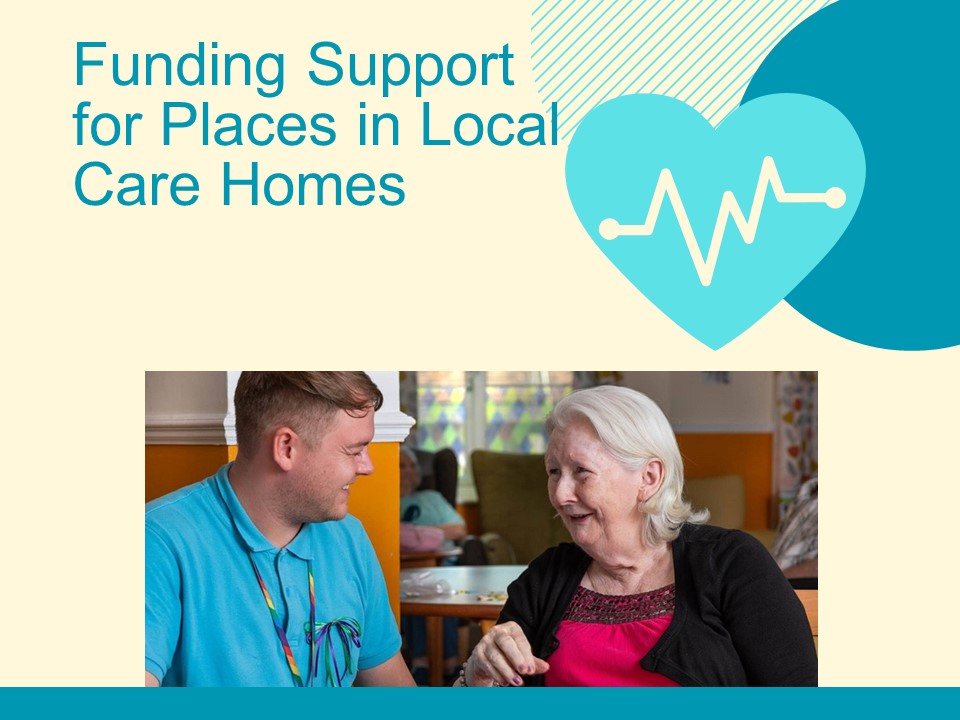
Title: Funding Support for Places in Local Care Homes
1
Funding Support for Places in Local Care Homes
2
Introduction
Hundreds of families need to make complex and
often emotional decisions every week about how
best to manage the care, welfare and safety of
loved ones and many more people are considering
a move into a residential care or nursing
facility as they find it difficult to cope
independently at home. Across the Forest
Healthcare network, discussions about financing
support are incredibly common. People and their
loved ones need to assess whether they qualify
for assistance or the proportion of their care
costs they might be expected to self-fund. Part
of the confusion is that the government
originally announced reforms on care funding in
November 2022, but they have since been postponed
several times and are now expected to come into
force in October 2025.
3
Funding for Local Care Home Places The Essential
Information
The first point to cover is that your care needs,
or those of your loved one, may influence the
types of care and residential homes that are most
suitable. For example, a residential home usually
provides help with personal care and emotional
support and offers comfortable, safe
accommodation for residents with a team of
qualified carers and support workers. In
contrast, a nursing home is more appropriate for
residents with ongoing medical conditions or
progressive diagnoses. Along with the above
services, nursing care homes have
around-the-clock medical cover and trained nurses
within their workforces who can help with
medications, rehabilitation and recovery from
illnesses or hospital stays.
4
State vs Self-Funded Care Placements
- There are two primary ways to cover the costs of
a care home space, usually paid monthly or weekly
depending on whether you require long-term
ongoing care, or short-term assistance such as
rehabilitation or respite care. - Self-funding means paying for the care home fees
directly. You can discuss your specific care
needs with the care coordinator on-site. - State funding means the local council pays for
some or all of the care home costs. - In many cases, the local authority will pay a
proportion of your care costs, and you may be
expected to contribute the balance. Much relies
on a means-testing process, where the council
evaluates the income, assets, and overall wealth
of the person requiring care.
5
Care Home Means Testing Thresholds 2024/25
Local authorities use means testing to ensure
they allocate the right financial support to each
claimant. However, we appreciate that many
families find an evaluation of their assets and
income intrusive.
6
- For the 2024/25 financial year in England, the
thresholds are as follows - The lower limit is 14,250 a care recipient with
income and capital below this value is normally
entitled to fully state-funded care in a suitable
setting. - The upper limit is 23,250 if you or your loved
one owns or earns above this value, you will
typically be expected to cover all care home
costs. - Those with an income and assets between the two
thresholds will generally receive partial state
funding and independently finance the rest of
their care costs. - To add to the complexity, people who fall above
the upper limit may have a clinical need for
high-quality residential care due to their
health, frailty, or mobility. In these scenarios,
the NHS can sometimes offer full coverage of all
care costs through the NHS Continuing Healthcare
system.
7
Alternative Funding Options in England to Help
With the Costs of a Local Residential Care Home
8
The NHS Continuing Healthcare Funding service is
available for people with a primary health need
who must have the right assistance to remain
healthy and comfortable. The application process
involves a care needs assessment, but there is no
means testing element. Therefore, regardless of
the upper and lower limits, a person with a
complex, ongoing condition may qualify for fully
funded social care based on an evaluation of
their personal care requirements and aspects such
as their medications, cognition, emotional
welfare and ability to communicate. NHS Funded
Nursing Care differs again and may be available
to people who do not qualify for Continuing
Healthcare Funding or local council support. The
NHS can contribute towards a proportion of the
care home fees related to nursing, based on a
fixed weekly contribution.
9
Independent Advice on Managing Care Home Costs
We recognise that the different funding options,
means assessments, and care needs evaluations can
be confusing. We hope this information outlines
some of the various ways to access support with
the costs of a care home or nursing care centre
for yourself or a loved one. The first step to
arranging the right care may be to arrange a good
time to visit your nearest Forest Healthcare
centre. Our skilled care coordinators and
managers can provide a guided tour to show you
the accommodation, amenities and facilities, and
discuss the right care solutions.
10
Information Source-
https//www.foresthc.com/funding-support-for-place
s-in-local-care-homes/
Thank You
Recommended

