

Japan 34 Colors of life1 PowerPoint PPT Presentation
Title: Japan 34 Colors of life1
1
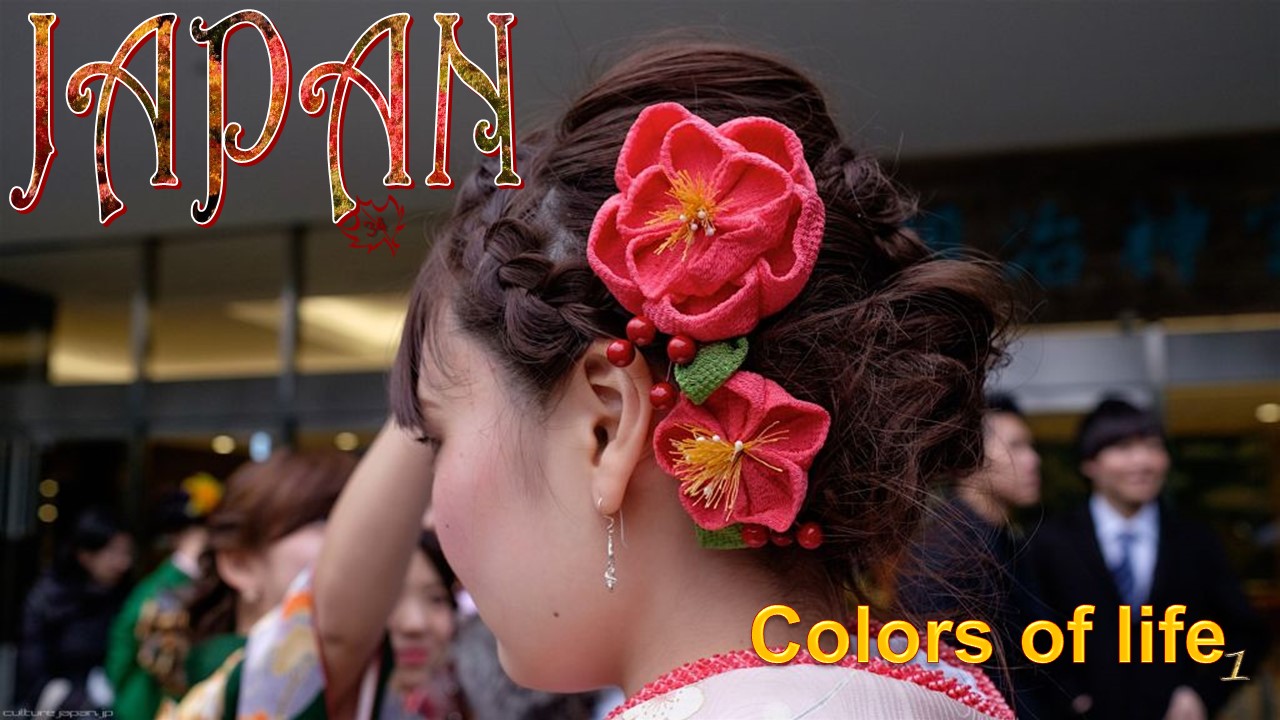
JAPAN
Colors of life
1
2
(No Transcript)
3
(No Transcript)
4
(No Transcript)
5
The second Monday of January is the Coming-of-Age
Day, and one of the national holidays
6
Every city or village holds a ceremony for
20-year-old people
7
Young people are regarded as adults after
celebrating this day. They are given the right to
vote as citizens for the first time
8
The ceremonies are generally held in the morning
at local city offices throughout Japan
9
Many women celebrate this day by wearing
Furisode, a style of Kimono with long sleeves
that hang down, and Zori sandals
10
Men sometimes also wear traditional dress (e.g.
dark kimono with Hakama), but nowadays many men
wear formal Western clothes such as a suit and
tie more often than the traditional hakama
11
A furisode ( lit. swinging sleeves) is a style of
kimono distinguishable by its long sleeves
12
Traditional hakama
13
(No Transcript)
14
(No Transcript)
15
(No Transcript)
16
(No Transcript)
17
(No Transcript)
18
(No Transcript)
19
(No Transcript)
20
Tsumami kanzashi are a traditional Japanese form
of hair decoration made from folding squares of
fabric, similar to origami
21
(No Transcript)
22
(No Transcript)
23
(No Transcript)
24
(No Transcript)
25
(No Transcript)
26
Tsumami kanzashi are most often seen adorning the
hairstyles of geisha
27
(No Transcript)
28
(No Transcript)
29
(No Transcript)
30
This style of hair ornament features red shidare,
or chains of silk flowers, and silver and gold
metallic accents
31
This kanzashi is mounted on a metal hair prong
for wear in updos and ponytails.
32
(No Transcript)
33
A maiko off-duty, dressed in kimono at Gion, Kyoto
34
(No Transcript)
35
(No Transcript)
36
(No Transcript)
37
(No Transcript)
38
(No Transcript)
39
(No Transcript)
40
(No Transcript)
41
(No Transcript)
42
Cattleya, graceful lady
43
(No Transcript)
44
(No Transcript)
45
The earliest visual depiction of fans in Japan
dates back to the 6th century CE, with burial
tomb paintings showed drawings of fans
46
The scarlet-fringed collar of the kimono hangs
very loosely in the back to accentuate the nape
of the neck, which is considered a primary erotic
area in Japanese sexuality
47
(No Transcript)
48
(No Transcript)
49
(No Transcript)
50
(No Transcript)
51
(No Transcript)
52
(No Transcript)
53
(No Transcript)
54
Maiko
55
Apprentice geisha are called maiko, (literally
"dance child") orhangyoku, "half-jewel" (meaning
that they are paid half of the wage of a full
geisha), or by the more generic term o-shaku,
literally "one who pours (alcohol)"
56
The only modern maiko that can apprentice before
the age of eighteen are in Kyoto
57
(No Transcript)
58
Maiko
59
It is still said that geisha inhabit a separate
reality which they call the karyukai or the
flower and willow world. Before they disappeared
the courtesans were the colorful flowers and
the geisha the willows because of their
subtlety, strength, and grace
60
Geta are a form of traditional Japanese footwear
that resemble both clogs and flip-flop. The
bottom view, show the teeth
61
Geta clogs mizutori white on black side
62
Traditional Japanese Footwear
63
(No Transcript)
64
Literally translating to arts person, geisha
are highly trained in Japanese traditional arts,
including music, singing and dancing. By
contrast, geiko is primarily used to refer to
geisha from Kyoto. Although geisha formerly
referred to only those from Tokyo and its
surrounding areas, it has now become the general
term for all geisha
Geiko
65
Maiko translates to dancing girl or child,
and refers to apprentice geiko. They undergo
about 5 years of training in various arts, before
graduating to become geiko. Outside of Kyoto, the
hangyoku in Tokyo would be the closest
equivalents to maiko. Hangyoku literally means
half jewel and are trainee geisha, although
little is known about their training process
Maiko
66
Geiko versus maiko Kyoto
67
So summed up, the difference between geiko and
maiko can be described as the difference between
accomplished master of their art and an
apprentice
68
Geiko versus maiko Kyoto
69
Hair style Geiko versus maiko
70
Maikos wear several elaborate hair ornaments,
or kanzashi, such as fan or ball-shaped ornaments
and combs. There is also the hanakanzashi an
ornament with silk flowers dangling from the
maikos head to her chin. While this is one of
the most recognisable hair ornaments, it is only
worn during the first year Minarai stage of a
maikos training
71
In contrast, geisha wear simpler ornaments or
decorative combs in their hair
72
Vintage Japanese Hakata Doll Geisha
Maiko
73
Maneki Neko Fortune beckoning cat Japanese
people are often asked about the difference
between the cat raising a right hand and the one
with its left hand raised. It is said that the
one with the right hand raised brings economic
fortune and the one with the left hand raised
brings customers
74
Maneki Neko Fortune beckoning cat Additionally,
the height of the raising hand makes a
difference. If the hand is raised overhead, this
cat brings big fortune from far away. On the
other hand, if the hand is raised lower, the cat
brings certainly small fortune close to you
75
Text pictures Internet All copyrights belong
to their respective owners Presentation
Sanda Foisoreanu
2016
Sound Kumada Kahori - Nasuno Yoichi
Recommended

