

The Importance of Fuel Storage Tanks for Farms PowerPoint PPT Presentation
Title: The Importance of Fuel Storage Tanks for Farms
1
The Importance of Fuel Storage Tanks for Farms
Whether it's powering equipment, running generators, or fuelling irrigation systems,
farms heavily depend on fuel to keep their operations running smoothly. This is why we
are looking at the importance of fuel storage tanks for farms in this article. Read on to
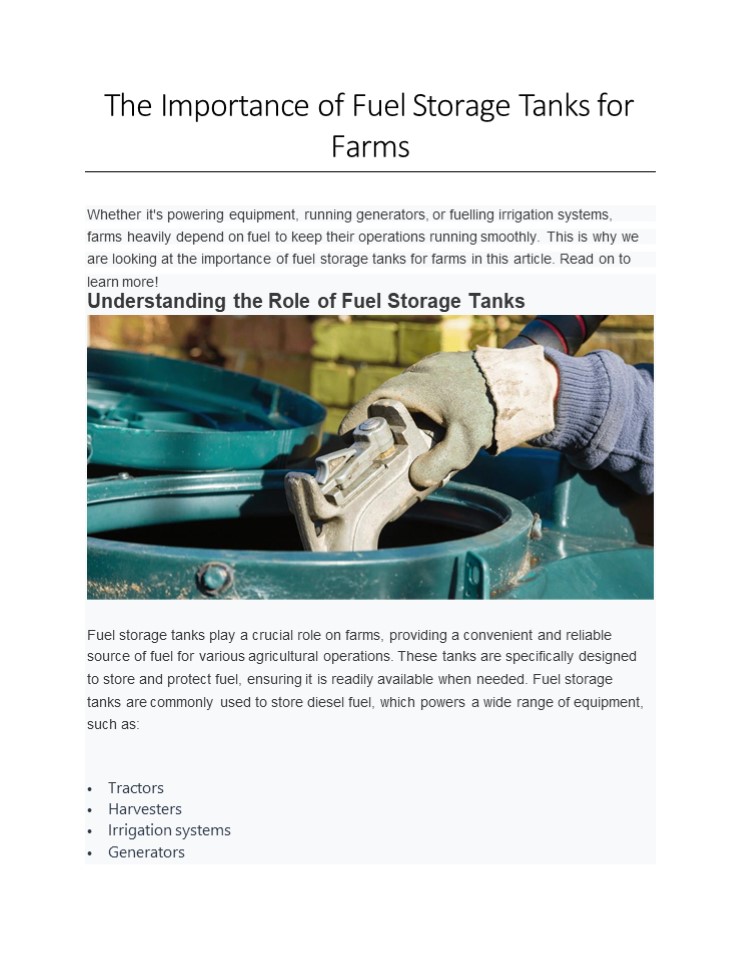
learn more! Understanding the Role of Fuel Storage Tanks Fuel storage tanks play a crucial role on farms, providing a convenient and reliable source of fuel for various agricultural operations. These tanks are specifically designed to store and protect fuel, ensuring it is readily available when needed. Fuel storage tanks are commonly used to store diesel fuel, which powers a wide range of equipment, such as Tractors Harvesters Irrigation systems Generators
2
Having on-site fuel storage eliminates the need
for frequent trips to refuel off- site, saving
time and increasing operational efficiency. It
also allows you to take advantage of bulk fuel
purchasing, which often leads to cost savings.
Additionally, fuel storage tanks on agricultural
sites contribute to emergency preparedness,
ensuring that there is a sufficient fuel supply
in case of power outages or natural disasters.
However, it is essential to follow proper safety
protocols when installing, maintaining, and
using fuel storage tanks to mitigate any
potential risks and ensure compliance with
environmental regulations. Regular inspections,
proper ventilation, and adherence to local
regulations are important aspects of maintaining
a safe and reliable fuel storage system on
farms. Benefits of Having Fuel Storage Tanks
Having fuel storage tanks on farms offers a range
of benefits that contribute to the efficiency,
convenience, and cost-effectiveness of
agricultural operations. Here are some key
advantages of having fuel storage tanks on
site. Operational Flexibility With on-site fuel
storage, farmers have the flexibility to manage
their fuel needs according to their specific
requirements. They can purchase fuel in larger
quantities,
3
taking advantage of bulk pricing and potential
discounts. This helps control fuel costs and
allows for efficient budgeting and financial
planning. On-Site Fuel Availability Fuel storage
tanks ensure a readily available fuel supply
right on the farm premises. This eliminates the
need for frequent trips to refuel off-site,
saving time, and reducing operational
disruptions. Farmers can conveniently access fuel
whenever required, optimising productivity and
minimising downtime. Cost Savings By purchasing
fuel in larger quantities, farms can take
advantage of volume discounts and potential
price fluctuations. Bulk fuel purchases through
on-site storage tanks can result in significant
cost savings over time, contributing to improved
financial management and profitability. Control
Over Fuel Quality Fuel storage tanks give farmers
greater control over the quality of the fuel used
on their farms. They can select suppliers that
provide high-quality fuel and ensure
proper storage conditions to prevent
contamination or degradation. This enhances
equipment performance, reduces maintenance
requirements, and extends the lifespan of
agricultural machinery. Emergency
Preparedness Fuel storage tanks on farms serve as
a vital component of emergency preparedness. In
the event of power outages or natural disasters,
having a sufficient fuel supply can keep
essential equipment working. This then helps
maintain farm operations, preserve perishable
goods, and ensure the well-being of
livestock. Increased Efficiency and
Productivity On-site fuel storage eliminates the
time and effort associated with travelling to
refuel, allowing farmers to focus more on their
core operations. It streamlines logistical
processes and reduces downtime caused by fuel
shortages. With easy access to fuel, equipment
such as tractors, harvesters, and other machinery
can be refuelled quickly, maximising efficiency
and overall productivity.
4
Environmental Compliance Properly designed and
maintained fuel storage tanks help farms comply
with environmental regulations. They prevent
fuel spills, leaks, or unauthorised access to
fuel, minimising the risk of environmental
contamination. Adhering to safety and
environmental standards demonstrates responsible
farming practices and supports sustainable
agriculture. Overall, the presence of fuel
storage tanks on farms provides numerous
benefits, including increased operational
efficiency, cost savings, emergency preparedness,
and greater control over fuel management. They
are an essential investment for farms,
contributing to streamlined operations, improved
productivity, and enhanced sustainability in the
agricultural industry. Selecting the Right Type
and Size of Fuel Storage Tanks for Farms
Selecting the right type and size of fuel storage
tanks is crucial for farms to ensure efficient
fuel management and compliance with safety
regulations. Here are some considerations when
choosing the type and size of fuel storage tanks
for farms
5
Fuel Usage and Storage Needs Assess your farm's
fuel usage patterns and estimate the amount of
fuel you typically require over a given period.
This analysis will help determine the appropriate
storage capacity needed for your fuel storage
tanks. Consider factors such as the number and
size of equipment that runs on fuel, the
frequency of refuelling, and any potential
changes in fuel consumption. Material and
Construction Select fuel storage tanks made from
durable materials that are compatible with the
type of fuel you will be storing. Common tank
materials include steel, fibreglass, and
polyethene. Consider factors such as corrosion
resistance, weather resilience, and any specific
requirements based on the fuel type and local
regulations. Above Ground or Underground
Tanks Decide whether above ground or underground
fuel storage tanks are more suitable for your
farm. Above-ground tanks are generally easier to
install, inspect, and maintain. They are also
more cost-effective and provide easier access to
fuelling. On the other hand, underground tanks
offer advantages such as space efficiency and
aesthetic considerations. However, they require
more complex installation procedures and may
have higher maintenance costs. At Compass
Energy, we work with above-ground tanks to put
the fuel in rather than pumping it into
underground tanks. Compliance with
Regulations Ensure that the selected fuel storage
tanks comply with applicable regulations and
safety standards. Consult local authorities and
relevant regulations to determine specific
requirements for tank design, installation, and
secondary containment. Compliance with
regulations helps minimise environmental risks
and ensures safe fuel storage practices.
6
- Safety Features and Accessories
- Evaluate the safety features and accessories
available with the fuel storage tanks. This may
include options such as - Spill containment systems.
- Overfill prevention devices.
- Leak detection systems.
- Venting mechanisms.
- These features contribute to safer fuel storage,
reduce the risk of accidents, and help with
environmental compliance. - Consultation with Professionals
- Engage with fuel storage tank manufacturers,
suppliers, or experienced professionals to seek
their advice and expertise. They can provide
valuable insights based on your specific
requirements and help determine the most
appropriate type and size of fuel storage tanks
for your farm. - If you need any help choosing the right storage
for you, were here to help and then we can
cater to your fuel needs! - Expansion Possibilities
- Consider future growth and expansion plans when
selecting the size of your fuel storage tanks.
It may be more cost-effective to invest in
slightly larger tanks upfront if you anticipate
increased fuel consumption in the future. This
allows for scalability and avoids the need for
frequent tank replacements or additions. - By considering these factors, farms can make
informed decisions when selecting the right type
and size of fuel storage tanks. Properly chosen
tanks contribute to
7
- Safe storage practices.
- Supporting the smooth operation and
sustainability of agricultural activities. - Maintaining and Managing Fuel Storage Tanks on
Farms
Proper maintenance and management of fuel storage
tanks on farms are essential to ensure safe
operations, prevent fuel contamination, and
comply with regulations. Here are some key
considerations for maintaining and managing fuel
storage tanks effectively Fuel Quality
Control Monitor and maintain the quality of the
fuel stored in the tanks. Regularly check for
water accumulation or microbial growth, which can
lead to fuel contamination. Consider using fuel
additives or treatments to prevent microbial
growth and maintain fuel stability. If any fuel
quality issues are detected, consult with fuel
specialists or suppliers for appropriate
solutions.
8
- Look at our agricultural and industrial
additives. - Regular Inspections
- Conduct routine inspections of fuel storage tanks
to identify any signs of damage, leaks, or wear.
Check for corrosion, cracks, loose fittings, or
deteriorating seals. Regular inspections help
catch potential issues early and allow for timely
repairs or replacements. - Scheduled Maintenance
- Follow a maintenance schedule recommended by the
tank manufacturer or a qualified professional.
This may include tasks such as cleaning, testing
for water accumulation, inspecting fuel filters,
and checking for the proper functioning of vents
and valves. - Adhering to maintenance routines helps ensure the
longevity and reliability of the fuel storage
tanks. - Environmental Compliance
- Familiarise yourself with local environmental
regulations regarding fuel storage tanks. Ensure
compliance with requirements for - Spill prevention
- Secondary containment
- Leak detection
- Reporting
- Regularly document tank inspections, maintenance
activities, and any related records as evidence
of adherence to regulations. - Spill Prevention and Response
9
- Employee Training
- Moving on from responding to fuel spills,
providing training to farm personnel involved in
fuel storage tank operations is a must! Train
personnel on spill response protocols,
including - Handling containment procedures
- Reporting mechanisms
- Cleanup techniques
- Handling procedures, safety protocols, and
emergency response measures are - very important when getting a fuel storage tank
for your farm. Therefore, training should cover - Fuel transfer techniques
- Spill prevention (as already discussed)
- Fire safety
- General tank maintenance guidelines
- Ensure that appropriate emergency response
equipment, such as spill kits and fire
extinguishers, is readily available near the fuel
storage area. Regularly communicate the
emergency response plan to farm personnel.
Well-trained employees contribute to a safe
working environment and reduce the risk of
accidents.
- Documentation and Record-Keeping
- Maintain detailed records, such as
- Tank inspections
- Maintenance activities
- Repairs
- Fuel deliveries
10
This documentation helps track compliance,
identify recurring issues, and provide a history
of tank maintenance and fuel management
practices. Retain records in a secure and
organised manner. Vendor Relationships Maintain
a good relationship with your fuel supplier or
tank maintenance provider. Communicate any
concerns, questions, or changes in fuel
requirements promptly. Regularly engage in
dialogue with suppliers to stay informed about
fuel quality, industry updates, and best
practices for fuel storage. Conclusion By
investing in proper fuel storage tanks, farms can
enjoy long-term benefits such as a reliable fuel
supply, cost savings, operational flexibility,
emergency preparedness, environmental
compliance, and peace of mind. It is a strategic
investment that contributes to the overall
efficiency, sustainability, and resilience of
farm operations.
Source URL - https//compassenergy.co.uk/the-impor
tance-of-fuel- storage-tanks-for-farms/
Recommended

