

Plant-based Meat Market Growth Drivers, Challenges, and Leading Players PowerPoint PPT Presentation
Title: Plant-based Meat Market Growth Drivers, Challenges, and Leading Players
1
Plant-based Meat Market Growth Drivers,
Challenges, Segmentation, and Leading Players
Plant-based meat refers to food products
that replicate the taste, texture, and
appearance of conventional meat but are made
entirely from plant ingredients. These
alternatives are designed to mimic the experience
of eating meat while being sourced from plants
such as soy, peas, mushrooms, or wheat protein.
They often contain various added ingredients and
flavors to emulate the taste and mouthfeel of
real meat. People choose plant-based meat for
various reasons, including health, environment
al concerns, and animal welfare, as it offers a
way to enjoy familiar meat-based dishes while
relying on plant-based ingredients.
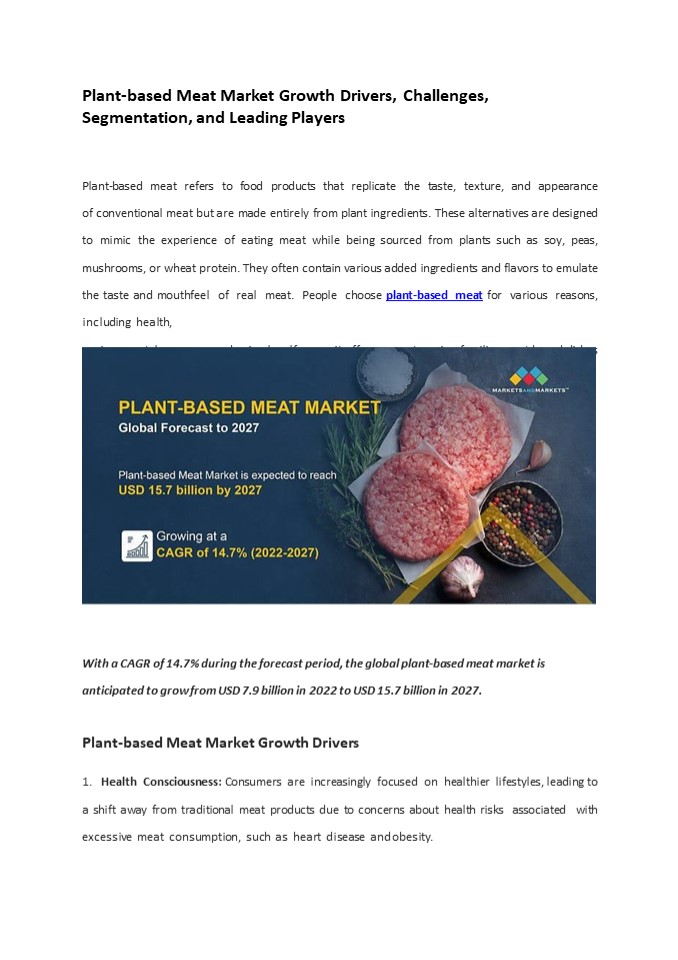
With a CAGR of 14.7 during the forecast period,
the global plant-based meat market is anticipated
to grow from USD 7.9 billion in 2022 to USD 15.7
billion in 2027. Plant-based Meat Market Growth
Drivers 1. Health Consciousness Consumers
are increasingly focused on healthier
lifestyles, leading to a shift away from
traditional meat products due to concerns about
health risks associated with excessive meat
consumption, such as heart disease and
obesity.
2
- Environmental Concerns Awareness about the
environmental impact of meat production,
including greenhouse gas emissions,
deforestation, and water usage, has led many
consumers to seek more sustainable
alternatives like plant-based meats. - Animal Welfare Growing concerns about animal
welfare and ethical considerations in meat
production have prompted consumers to
explore cruelty-free options offered by
plant-based meats. - Taste and Innovation Advancements in food
technology have allowed plant-based - meat manufacturers to create products that
closely mimic the taste, texture, and appearance
of conventional meat, attracting
consumers looking for meat alternatives
without compromising on flavor. - Availability and Accessibility Increasing
availability of plant-based meat products in
supermarkets, restaurants, and fast-food chains
has made these alternatives more accessible to
consumers, contributing to market growth. - Plant-based Meat Market Challenges
- Taste and Texture Achieving the exact taste and
texture of traditional meat remains a challenge.
Consumers often compare plant-based alternatives
to the real thing, and any discrepancies can
affect their acceptance. - Cost of Production The production process for
plant-based meats can be expensive due to the use
of specialized ingredients and technology. As a
result, the retail price might be higher
than conventional meat, limiting
accessibility to a broader consumer base. - Supply Chain and Infrastructure Establishing a
robust supply chain for sourcing raw materials
and ensuring efficient distribution can be
challenging, especially when demand surges. - Consumer Perception and Education Some
consumers remain skeptical or misinformed
about plant-based meats, leading to resistance or
hesitation in trying
3
these products. Educating the public about their
benefits and dispelling myths is an ongoing
challenge. 5. Regulatory Environment
Regulations and labeling standards around
plant-based products vary across regions.
Ambiguity or strict regulations can affect
market penetration and consumer
trust. Plant-based Meat Market
Segmentation This research report categorizes
the plant-based meat market based on source,
type, product, distribution channel, storage,
and region.
By Source
- Soy
- Wheat
- Pea
- Other sources (quinoa, oats, beans, nuts, and
seeds)
By Type
- Beef
- Chicken
- Pork
- Fish
- Other types (lamb and turkey)
By Products
- Burger patties
4
- Strips nuggets
- Sausages
- Meatballs
- Other products (slices, fillets, cutlets, slides,
fingers, and crumbles)
By Distribution Channel
- Food retail
- Food services
- E-commerce
- By storage
- Frozen
- Refrigerated
- Shelf-stable
- Request Sample Pages
- https//www.marketsandmarkets.com/requestsampleNew
.asp?id44922705 - Leading Players in the Plant-based Meat Market
- Beyond Meat (US)
- Kellogg Company (US)
- Impossible Foods Inc. (US)
- Maple Leaf Foods (Canada)
- Unilever (UK)
- Conagra Foods (US)
5
- Monde Nissin (Philippines)
- Get 10 Free Customization on this Report
- https//www.marketsandmarkets.com/requestCustomiza
tionNew.asp?id44922705 - Plant-based Meat Market Frequently Asked
Questions (FAQs) - Q1. What is plant-based meat?
- Q2. What are the main types of plant-based meat?
Q3. Is plant-based meat good? - Q4. What is the current size of the global
Plant-based Meat Market? Q5. Which is leading
plant-based meat manufacturers in USA? - Q6. How profitable is the plant-based meat
industry? - Browse Related Reports
- Meat Products Market
- Meat Substitutes Market
For more information click here https//www.mark
etsandmarkets.com/Market-Reports/plant-based-meat-
market-44922705.html
Recommended

