

P7 Aviation: EASA and DGCA Approved Pilot Training Institute in Sharjah PowerPoint PPT Presentation
Title: P7 Aviation: EASA and DGCA Approved Pilot Training Institute in Sharjah
1
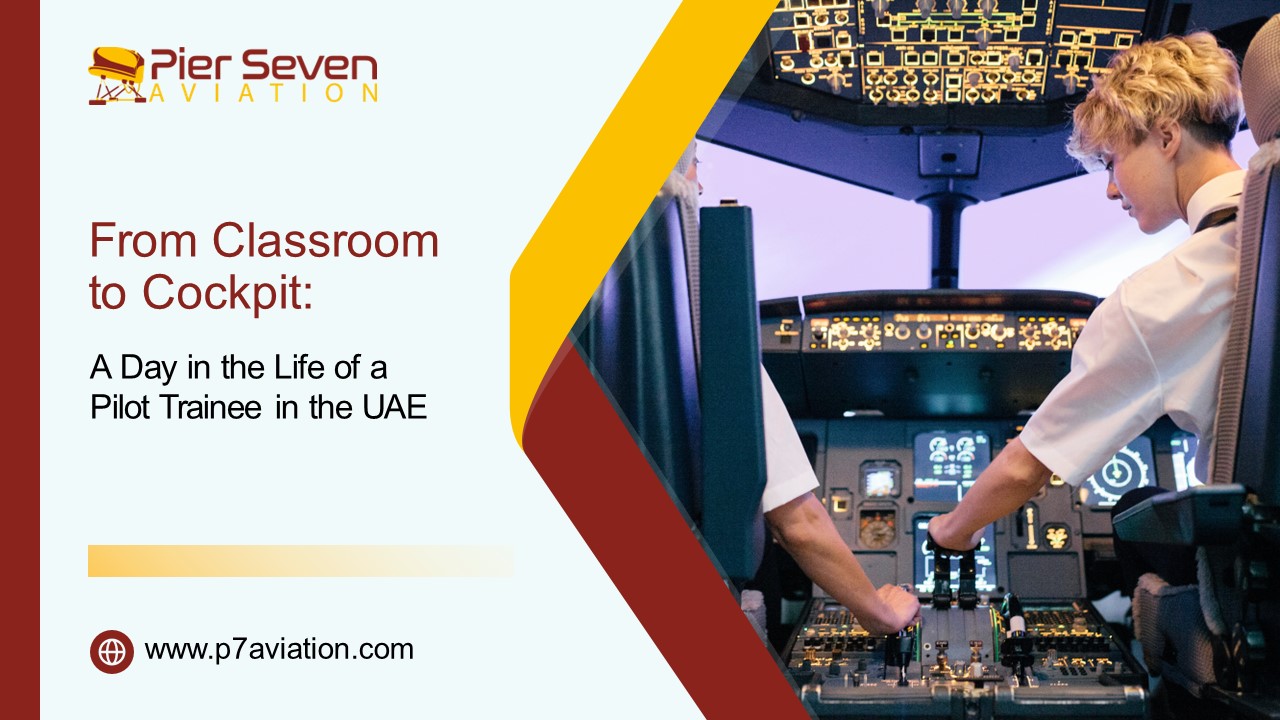
From Classroom to Cockpit
A Day in the Life of a Pilot Trainee in the UAE
www.p7aviation.com
2
INTRODUCTION
Becoming a pilot is a dream for many, and the UAE
offers world-class training programs for aspiring
pilots. If youre interested in pursuing a career
in aviation, its important to know what to
expect on a day-to-day basis. In this blog, well
give you an inside look into the life of a pilot
trainee in the UAE, from the classroom to the
cockpit.
Page2
3
CLASSROOM TRAINING
Before taking to the skies, pilot trainees spend
a significant amount of time in the classroom.
Instructors cover a wide range of topics, from
aviation regulations and safety procedures to
aircraft systems and weather patterns. Trainees
learn about the principles of flight, the physics
of flying, and how to read instruments and
navigate.
One of the key aspects of classroom training is
ground school, where trainees learn about the
theoretical aspects of aviation. This includes
topics such as meteorology, aircraft systems, and
navigation. Trainees will also learn about the
specific aircraft they will be flying and how to
operate them safely and effectively.
Additionally, trainees will study the UAE
airspace and become familiar with the regulations
and procedures they will need to follow as
pilots. They will also learn about the different
types of airspace, such as controlled and
uncontrolled airspace, and the specific rules.
Page3
4
FLIGHT SIMULATORS
In addition to classroom training, pilot trainees
will spend a significant amount of time in flight
simulators. Flight simulators provide a realistic
and safe environment for trainees to practice
flying and handling different scenarios that they
may encounter in real life. Flight simulators
are equipped with advanced technology that
simulates different weather conditions,
instrument failures, and emergency situations.
Trainees will practice taking off and landing,
flying in different types of airspace, and
handling emergencies such as engine
failures. Flight simulators also provide
trainees with the opportunity to practice working
in a team environment. Trainees will learn how to
communicate effectively with air traffic
controllers and other pilots, as well as how to
work together to handle emergencies.
Page4
5
FLIGHT TRAINING
Once trainees have completed their classroom and
simulator training, they will move on to flight
training. Flight training takes place in real
aircraft, under the guidance of experienced
flight instructors. During flight training,
trainees will put their classroom and simulator
knowledge into practice. They will learn how to
take off and land, fly in different types of
airspace, and communicate effectively with air
traffic controllers.
Trainees will start with basic maneuvers, such as
straight and level flight, before moving on to
more advanced maneuvers such as stalls and steep
turns. They will also practice emergency
procedures, such as engine failures and landings
without power. As trainees progress through
flight training, they will build up their flight
hours and experience. They will learn how to
handle different types of weather conditions, and
will eventually learn how to navigate and fly
longer distances.
Once trainees have completed their flight
training, they will be ready to take their
pilots license exam. This exam consists of a
written portion and a practical test, where
trainees will demonstrate their flying skills.
Page5
6
THE LIFE OF A PILOT TRAINEE
The life of a pilot trainee is demanding, both
mentally and physically. Trainees must be able to
manage stress, work well under pressure, and
communicate effectively with others. Trainees
will spend long hours in the classroom and in
simulators, and will need to be able to absorb a
significant amount of information. They must also
be physically fit, as flying requires good
physical stamina. In addition to their training,
trainees will need to complete medical exams and
meet specific English language proficiency
requirements. They will also need to pass a
background check and meet specific age and
education requirements. Despite the challenges,
becoming a pilot is a rewarding and fulfilling
career. Pilots have the opportunity to travel the
world, meet new people, and experience different
cultures.
Page6
7
THANK YOU
Visit Our Website
www.p7aviation.com
Contact Us
971 65 56 7020 Toll-Free 0008000503315 (India
Only)
8
LET ME SHARE A LITTLE
ABOUT ME
HENRIETTA MITCHELL
Recommended

