

Dental Crowns: Types, Procedure & Care PowerPoint PPT Presentation
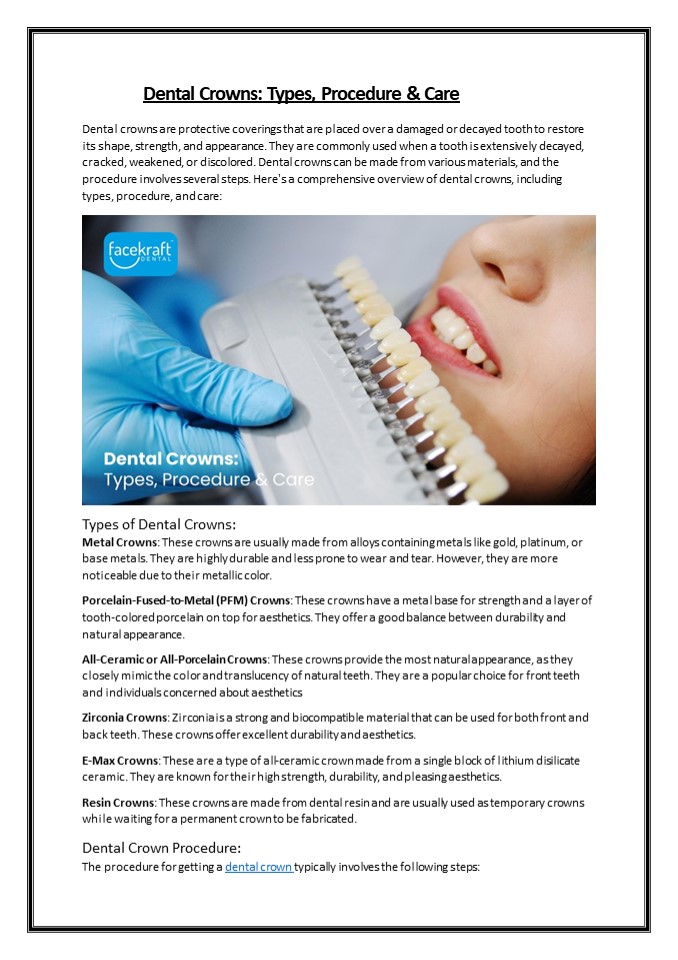
Title: Dental Crowns: Types, Procedure & Care
1
Dental Crowns Types, Procedure Care
Dental crowns are protective coverings that are
placed over a damaged or decayed tooth to restore
its shape, strength, and appearance. They are
commonly used when a tooth is extensively
decayed, cracked, weakened, or discolored.
Dental crowns can be made from various materials,
and the procedure involves several steps. Here's
a comprehensive overview of dental crowns,
including types, procedure, and care
Types of Dental Crowns Metal Crowns These
crowns are usually made from alloys containing
metals like gold, platinum, or base metals. They
are highly durable and less prone to wear and
tear. However, they are more noticeable due to
their metallic color. Porcelain-Fused-to-Metal
(PFM) Crowns These crowns have a metal base for
strength and a layer of tooth-colored porcelain
on top for aesthetics. They offer a good balance
between durability and natural appearance. All-Cer
amic or All-Porcelain Crowns These crowns
provide the most natural appearance, as they
closely mimic the color and translucency of
natural teeth. They are a popular choice for
front teeth and individuals concerned about
aesthetics Zirconia Crowns Zirconia is a strong
and biocompatible material that can be used for
both front and back teeth. These crowns offer
excellent durability and aesthetics. E-Max
Crowns These are a type of all-ceramic crown
made from a single block of lithium disilicate
ceramic. They are known for their high strength,
durability, and pleasing aesthetics. Resin
Crowns These crowns are made from dental resin
and are usually used as temporary crowns while
waiting for a permanent crown to be
fabricated. Dental Crown Procedure The procedure
for getting a dental crown typically involves the
following steps
2
Dental Examination The dentist examines the
tooth to determine if a crown is necessary.
X-rays may be taken to assess the extent of
damage. Tooth Preparation The tooth is shaped to
create space for the crown. This involves
removing a portion of the tooth's outer layer. If
the tooth is severely damaged, it might need to
be built up with filling material. Impression
An impression of the prepared tooth and
surrounding teeth is taken. This impression is
sent to a dental laboratory to create the custom
crown. Temporary Crown While waiting for the
permanent crown to be made, a temporary crown is
placed to protect the prepared tooth. Crown
Placement Once the permanent crown is ready, the
temporary crown is removed, and the permanent
crown is checked for fit, color, and alignment.
If everything is satisfactory, the crown is
cemented in place. Final Adjustments The dentist
might make minor adjustments to ensure proper
bite and comfort. Caring for Dental
Crowns Proper care is essential to ensure the
longevity of your dental crown Oral Hygiene
Brush and floss regularly to maintain good oral
hygiene. Crowns are not susceptible to decay,
but the underlying tooth and gums still need
protection. Avoid Hard Foods Be cautious with
very hard or sticky foods that could potentially
damage the crown. Regular Dental Visits
Continue to visit your dentist in Jaipur for
regular check-ups and cleanings. They can
monitor the health of the crowned tooth and the
surrounding gums. Night Guards If you grind your
teeth at night, consider using a night guard to
prevent excessive pressure on the crown. Avoid
Bad Habits Refrain from using your teeth as
tools to open packages or bottles, as this could
damage the crown. Tobacco and Staining
Substances Minimize or avoid tobacco and
substances that can stain teeth, as they can
also affect the color of the crown. The lifespan
of a dental crown depends on the type of crown,
the material used, your oral hygiene practices,
and other factors. With proper care, dental
crowns can last many years, providing both
functional and aesthetic benefits. It's essential
to consult your dentist in Jaipur for
personalized guidance on crown care and
maintenance.
Recommended

