

Skin Blisters Causes And treatment PowerPoint PPT Presentation
Title: Skin Blisters Causes And treatment
1
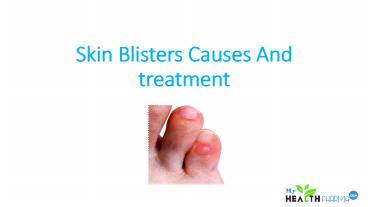
Skin Blisters Causes And treatment
2
- Skin blisters are painful fluid-filled sacs.
- Usually, seen on the feet and hands.
- They are treatable, but preventable.
3
Causes Of Blisters
- Constant friction
- Exposure to extreme cold and hot weather
- Dermatitis
- Shingles or chickenpox
4
- Viral infection
- Herpes simplex
- Bug bites
5
Skin Blister Treatment
Blister Care
- Dont drain in unhygienic condition
6
Even If you drain -
- Rub with spirit
- Do wound dressing
- Apply antibiotic cream
- Gently press to ooze fluid
- Puncture with sterilized needle
7
Aloe Vera Gel
- One of the best healers for itchy blisters.
- Has natural anti-inflammatory properties.
- Reduces swelling, redness and itching.
8
Apple Cider Vinegar
- Dab or soak blister in apple cider vinegar
solution. - An ancient remedy with antibacterial effects.
- Treats and prevents skin blisters.
9
Castor Oil
- Popular remedy for treating blisters.
- Apply on blister before going to bed.
- To enhance recovery, add apple cider vinegar.
10
Tea Tree Oil
- An astringent with antibacterial properties.
- Dries up and heals skin blister promptly.
- Use a quality tea tree oil-based ointment.
11
Salt Water
- Salt-water foot soaking heals skin blisters on
feet. - Best way to get rid of skin blisters.
- Cleans your lesion from sweat and dirt.
12
Green Tea
- Contains anti-inflammatory properties that aid
blister healing. - Soak your feet in a solution of warm water
containing three green tea bags. - Have green tea twice or thrice to promote healing.
13
Vitamin E Supplement
- An excellent nutrient for skin disease and
blisters. - Promotes healing and prevents scarring.
- Start daily vitamin E supplement.
14
Let Your Blister Breathe
- Keep your blister uncovered in a clean
atmosphere. - Remove bandage when indoors.
- Apply a thin layer of antibiotic cream.
15
Consult Doctor
- Multiple and severe blisters.
- Infected with pus and crust formation.
- Recurrent skin blisters.
16
(No Transcript)
17
Thank You
Recommended

