

Know What Should – and Shouldn't – Affect Student Loan Borrowing PowerPoint PPT Presentation
Title: Know What Should – and Shouldn't – Affect Student Loan Borrowing
1
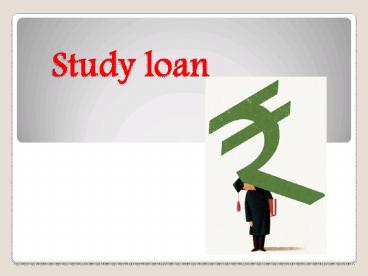
Study loan
2
(No Transcript)
3
Know What Should and Shouldn't Affect Student
Loan Borrowing
- The class of 2015 graduated as the most indebted
ever, with an average debt level of approximately
35,000, reported The Wall Street Journal. - Before it, the class of 2014 held the "honor,"
owing approximately 33,000 on average. And
before that, there was the class of 2013, which
owed approximately 31,000 per student. - With a new school year right around the corner,
and new loans coming with it, future classes
should be asking how to bust this trend.
4
- Do Consider Post graduation Salary
- The biggest consideration is obvious, but
nonetheless true only borrow what you can repay. - That may be easier said than done, since you
won't know what you can afford until you get a
job after graduation. There are ways around this,
though. - Don't Consider Loan Forgiveness
- If you're looking at a career in public service,
you may also be eyeing Public Service Loan
Forgivenessto eliminate some of the debt you take
on. - And while forgiveness programs are a huge benefit
to borrowers, you may not want to plan how much
you borrow around them.
5
- Do Consider the Loan Type
- While private loans may advertise low interest
rates, these rates may be variable and tough to
qualify for in the first place. - Federal loans come with fixed interest rates, so
you can estimate exactly how much you'll owe each
month after leaving school and plan accordingly.
6
- Don't Consider Promises of Repayment
- Often, parents take on these loans with the
understanding stated or otherwise that their
children will help with these payments after
graduation. - However, parents should understand that in the
case of the federal Parent PLUS, the parent signs
the promissory note and is ultimately responsible
for these debts if the child cannot pay them. - This doesn't mean you shouldn't help your son or
daughter, but you should do it in the context of
what you can afford, not what they promise to
repay you.
7
- In the case of a parent cosigning a private loan,
there may be the possibility of having the
co-signer released from the Study loan after a
certain number of on-time payments. - However, a recent report by the Consumer
Financial Protection Bureau says this process
isn't always as straightforward as it would seem,
so make sure you study up on the lender's release
policy before signing for the loan. - Source (http//bit.ly/1LE6EWK)
8
Follow us on
https//www.facebook.com/AvanseEducationLoan
https//www.linkedin.com/company/avanse-financial-
services
https//twitter.com/avanseeduloan
https//plus.google.com/AvanseFinancialServicesLt
dMumbai
https//www.youtube.com/channel/UCcsuUx1EH1C08XmX2
embpug
9
Read more on Education Loans
http//www.avanse.com/avanse-education-loans/
Thank You..!!!
Recommended

