

The Growing Importance of Governance, Risk, and Compliance in Modern Business PowerPoint PPT Presentation
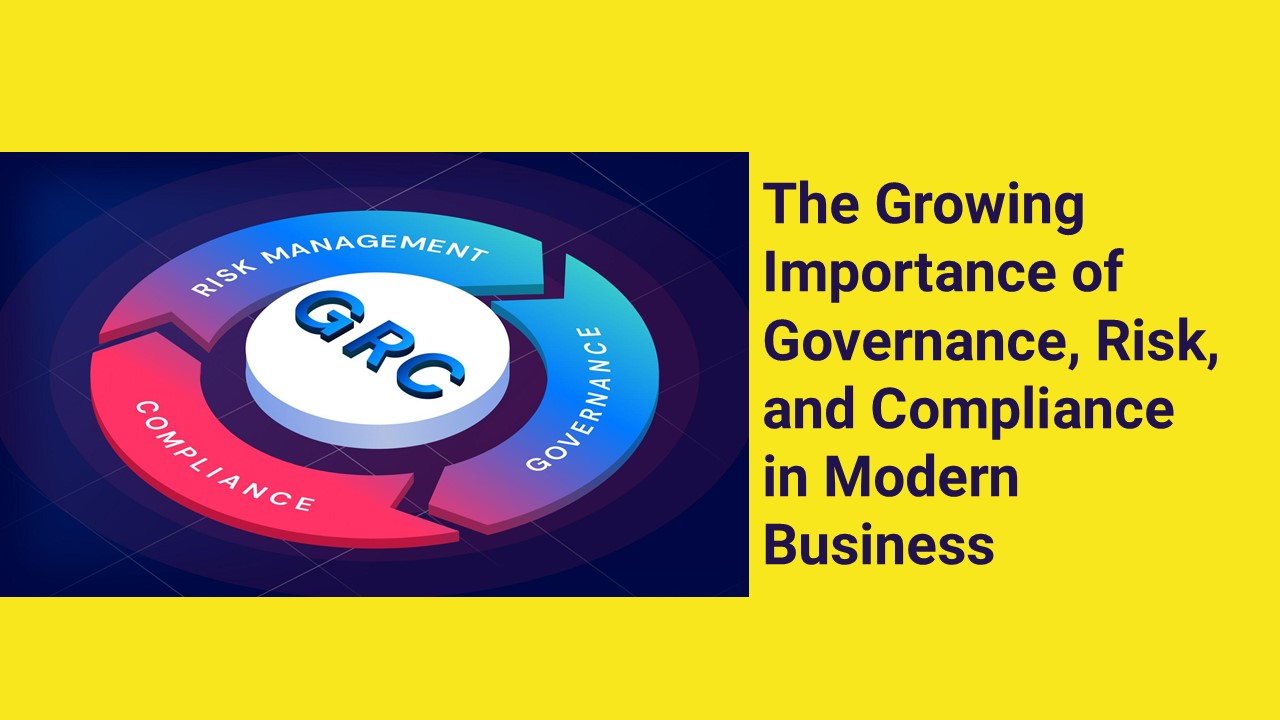
Title: The Growing Importance of Governance, Risk, and Compliance in Modern Business
1
The Growing Importance of Governance, Risk, and
Compliance in Modern Business
2
The Growing Importance of Governance, Risk, and
Compliance in Modern Business
In today's fast-paced business environment,
Governance, Risk, and Compliance (GRC) have
emerged as critical pillars ensuring that
organizations maintain ethical standards, legal
compliance, and effective risk management.
Businesses across industries are under constant
scrutiny from regulatory bodies, stakeholders,
and customers, necessitating a structured
approach to governance and compliance. However,
traditional methods of managing complianceoften
involving spreadsheets, paper-based
documentation, and manual monitoringare proving
to be inefficient and error-prone. To navigate
these challenges, organizations are increasingly
turning to Compliance Management Software (CMS),
a digital solution designed to streamline
compliance processes, improve risk assessment,
and enhance governance frameworks. This article
explores the significance of Governance, Risk,
and Compliance, the obstacles businesses face
with conventional compliance methods, and the
transformative role of Compliance Management
Software in modernizing GRC practices.
3
Understanding Governance, Risk, and Compliance
(GRC) GRC is a strategic framework that
integrates three essential functions to promote
ethical business operations, reduce risks, and
ensure adherence to regulatory standards Governan
ce This involves setting policies, guidelines,
and accountability measures to align business
activities with corporate objectives and ethical
standards. It ensures that decision-making
processes are transparent, well-documented, and
in the organization's best interest. Risk
Management Organizations face various risks,
including financial, operational, legal, and
reputational threats. Risk management involves
identifying, analyzing, and mitigating these
potential hazards before they escalate into
significant business disruptions. Compliance
Compliance ensures that a company adheres to
external regulations, industry standards, and
internal policies. It involves monitoring legal
obligations, managing audits, and maintaining
accurate records to prevent non-compliance
penalties and reputational damage. A
well-structured GRC strategy ensures that
businesses operate within the legal framework,
mitigate potential threats, and maintain a
culture of accountability and ethical conduct.
4
Challenges of Traditional Compliance Management
Despite the critical role of Governance, Risk,
and Compliance, many organizations still rely on
outdated, manual processes for compliance
tracking. Such methods come with several
challenges
1. Increasing Regulatory Complexity
Regulations continuously evolve, with frequent
updates, amendments, and region-specific
variations. Manually keeping track of these
changes across multiple jurisdictions can be
overwhelming, increasing the likelihood of
non-compliance.
2. Lack of Centralized Oversight
Organizations operating across multiple
departments or locations often struggle to track
compliance obligations cohesively. Without a
centralized system, businesses may face
inconsistencies in compliance reporting and an
increased risk of regulatory breaches.
3. Risk of Human Errors and Missed Deadlines
Manual tracking of compliance tasks, deadlines,
and requirements is prone to human errors.
Missing a regulatory deadline or failing to
update compliance documentation can lead to hefty
fines, legal issues, and reputational damage.
5
4. Inefficient Workflow and Approval
Delays Traditional compliance management relies
on multiple stakeholders, including legal teams,
compliance officers, and auditors. Without
automation, assigning responsibilities, approving
compliance actions, and tracking progress can
become cumbersome and inefficient. 5. Challenges
in Reporting and Audit Readiness Preparing
compliance reports manually is not only
time-consuming but also increases the risk of
data inaccuracies. Inadequate reporting can make
audits difficult and result in compliance gaps
that expose businesses to regulatory penalties.
6
How Compliance Management Software Enhances GRC
Processes
To address these challenges, organizations are
adopting Compliance Management Software (CMS) as
an efficient and reliable solution to automate
and streamline GRC functions. Heres how CMS
enhances Governance, Risk, and Compliance
1. Automated Compliance Tracking
A CMS provides real-time updates on regulatory
changes, ensuring businesses remain informed
about evolving compliance requirements. Automated
tracking reduces the risk of missing legal
amendments, improving regulatory adherence.
2. Centralized Compliance Database
With a cloud-based CMS, organizations can store
and access a comprehensive compliance database
covering national, state, and industry-specific
regulations. This centralized repository
simplifies compliance tracking, document
retrieval, and regulatory reporting.
3. Workflow Automation and Role-Based Access
Modern CMS platforms allow organizations to
automate workflows by assigning roles such as
performers, reviewers, and approvers. Structured
workflows ensure that compliance tasks are
executed in a timely manner, with real-time
tracking of approvals and task completion.
7
4. Real-Time Reporting and Compliance
Dashboards With advanced analytics, CMS solutions
offer real-time insights into compliance status,
risk levels, and pending tasks. Organizations can
generate detailed compliance reports for audits,
management reviews, and regulatory filings,
ensuring complete transparency. 5. Risk
Management and Incident Tracking A CMS integrates
risk assessment tools that help organizations
proactively identify, analyze, and mitigate
compliance-related risks. Automated alerts notify
compliance teams of upcoming deadlines and
potential issues, allowing timely corrective
actions.
8
6. Secure Document Management
Maintaining compliance documents manually
increases the risk of misplaced records, data
breaches, and unauthorized access. CMS ensures
secure document storage with encryption, version
control, and role-based access to safeguard
sensitive compliance data.
7. Cloud-Based and Mobile Accessibility
Many modern CMS solutions are cloud-based,
enabling organizations to access compliance data
from anywhere. Mobile-friendly CMS platforms
further enhance accessibility by allowing
compliance tracking, approvals, and notifications
on the go..
9
The Future of GRC Embracing Digital
Transformation As regulatory landscapes continue
to evolve, businesses must move beyond
traditional compliance methods and embrace
digital transformation in Governance, Risk, and
Compliance. The future of GRC is shaped by
technological advancements that enhance
automation, predictive risk analysis, and data
security. Some key trends defining the future of
GRC include Artificial Intelligence (AI) in
Compliance AI-driven compliance tools can
predict risks, automate compliance monitoring,
and enhance regulatory intelligence. Blockchain
for Secure Compliance Records Blockchain
technology ensures transparency and data
integrity in regulatory filings, reducing
compliance fraud risks. Integrated GRC Platforms
Organizations are increasingly adopting unified
GRC platforms that consolidate governance, risk
management, and compliance into a single,
cloud-based solution.
10
In the modern business environment, maintaining
Governance, Risk, and Compliance is no longer a
choice but a necessity. Traditional, manual
compliance management approaches are becoming
obsolete, leaving organizations vulnerable to
regulatory risks and inefficiencies. Compliance
Management Software presents a comprehensive
solution, offering automation, centralization,
and enhanced risk management capabilities. By
investing in CMS, organizations can streamline
compliance tracking, automate workflows, and
ensure continuous regulatory adherence. As
businesses transition toward digital-first
compliance strategies, adopting CMS will not only
enhance efficiency but also foster a culture of
governance, transparency, and risk mitigation. In
a world where regulatory scrutiny is
intensifying, ensuring a robust GRC framework
through technology is the key to long-term
success and compliance resilience.
Recommended

