

Insights into the hosiery business PowerPoint PPT Presentation
Title: Insights into the hosiery business
1
The Future Trends, Challenges and Opportunities
in the Hosiery Industry
- The hosiery market, encompassing socks,
stockings, tights, leggings, and more, is a
fundamental sector in the textile industry. From
providing everyday comfort to offering
performance-driven athletic wear, hosiery
products are essential wardrobe staples. But how
big is this market, and what's driving its
growth? - Hosiery Market Size and Growth Rate
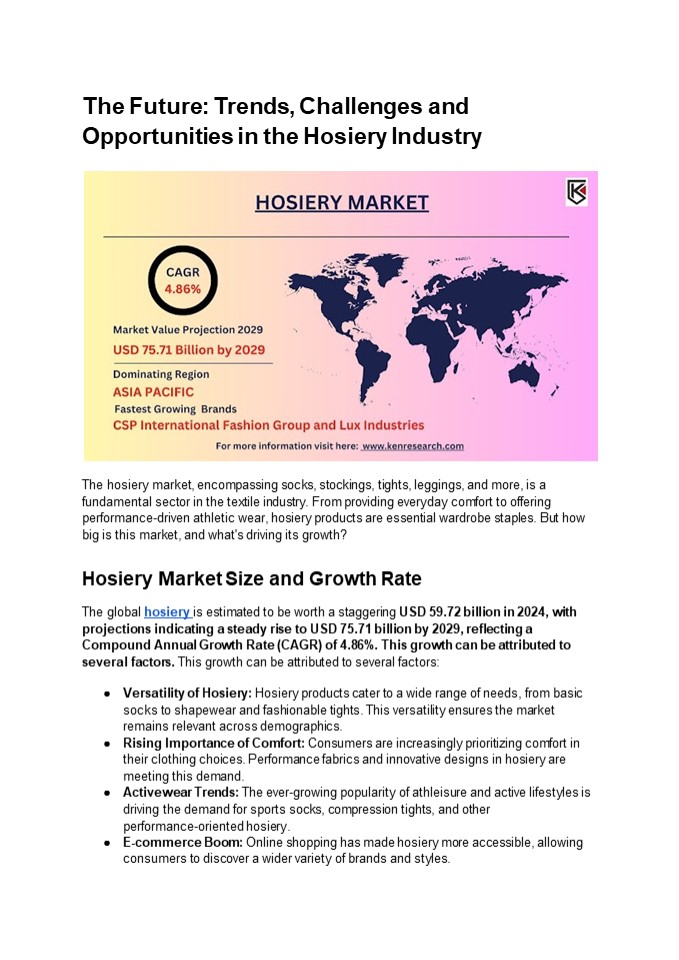
- The global hosiery is estimated to be worth a
staggering USD 59.72 billion in 2024, with
projections indicating a steady rise to USD 75.71
billion by 2029, reflecting a Compound Annual
Growth Rate (CAGR) of 4.86. This growth can be
attributed to several factors. This growth can
be attributed to several factors - Versatility of Hosiery Hosiery products cater to
a wide range of needs, from basic socks to
shapewear and fashionable tights. This
versatility ensures the market remains relevant
across demographics. - Rising Importance of Comfort Consumers are
increasingly prioritizing comfort in their
clothing choices. Performance fabrics and
innovative designs in hosiery are meeting this
demand. - Activewear Trends The ever-growing popularity of
athleisure and active lifestyles is driving the
demand for sports socks, compression tights, and
other - performance-oriented hosiery.
- E-commerce Boom Online shopping has made hosiery
more accessible, allowing consumers to discover
a wider variety of brands and styles.
2
- India A Hosiery Powerhouse
- India is a major player in the global hosiery
industry. The Indian hosiery market itself is
expected to reach a value of ?36,000 crore by
2024, boasting a growth rate of around 12.
Ludhiana, a city in Punjab, is particularly
renowned as a hub for hosiery production, earning
it the nickname "The hosiery capital of India". - Hosiery Market Trends Stepping Beyond the Basics
- The hosiery market, while seemingly simple on the
surface, is a diverse and thriving industry
fueled by ever-changing apparel and textile
market trends and a focus on specific consumer
needs. The market trends shaping the hosiery
landscape and explore the various segments that
categorize this dynamic Textile Industry. - Market Trends Reshaping the Hosiery Industry
- Comfort Reigns Supreme Consumers are
prioritizing comfort in their clothing choices,
and hosiery is no exception. Breathable fabrics,
moisture-wicking technology, and seamless
construction are all gaining traction. - Athletic Boom The activewear trend continues to
surge, propelling the demand for
performance-oriented hosiery. From cushioned
running socks to compression tights for faster
recovery, the focus is on functionality and
support. - Sustainable Focus Eco-consciousness is
influencing consumer behavior. Sustainable
materials like organic cotton, recycled
polyester, and natural dyes are finding favor in
the hosiery market. - Tech Takes Hold Technological advancements are
leading to innovative hosiery products. Features
like self-heating socks, embedded activity
trackers, and anti-odor technology are blurring
the lines between hosiery and activewear. - Personalization on the Rise Consumers are
seeking hosiery that caters to their individual
needs. Customization options like size
inclusivity, compression levels, and bespoke
designs are becoming increasingly important. - Read More- Asias Textile Manufacturing Industry
Size, Share, andGrowth (20242029) - Major Players in the Hosiery Market
- The global hosiery market boasts a diverse range
of players, from established giants to
innovative newcomers. Some of the major companies
shaping the hosiery industry - Global Leaders
3
- CSP International Fashion Group S.p.A. (Italy)
This Italian company owns popular brands like
Calzedonia, Tezenis, and Intimissimi, offering
fashion-forward hosiery, lingerie, and
beachwear. - Jockey International, Inc. (US) A renowned brand
recognized for its commitment to comfort and
innovation, Jockey provides a broad spectrum of
hosiery products for men, women, and children. - LVMH Moët Hennessy Louis Vuitton SE (France)
This luxury conglomerate owns several high-end
fashion houses like Dior and Fendi, which offer
designer hosiery and legwear as part of their
collections. - Strong Regional Players (India)
- Lux Industries Ltd. A dominant player in the
Indian hosiery market, Lux Industries is known
for brands like Lux Cozi, ONN, and offers a wide
range of innerwear, socks, and thermals. - Rupa Co. Ltd. Another major force in the
Indian market, Rupa Co. offers a diverse range
of hosiery products under brands like Rupa, Jon,
Frontline, and Euro. - Dollar Industries Ltd. Focusing on value and
affordability, Dollar Industries is a popular
choice for everyday hosiery needs in India. - Other Notable Players
- Gilfin S.p.A. (Golden Lady Company S.p.A.)
(Italy) Specializing in women's hosiery, Golden
Lady offers a variety of pantyhose, tights, and
leggings under brands like Golden Lady and
Fiore. - Spanx, Inc. (US) Renowned for its shapewear
innovations, Spanx has expanded into broader
hosiery categories, offering leggings and tights
that combine style with functionality. - Hosiery Market Segmentation
- The hosiery market can be segmented into various
categories to gain a deeper understanding of
consumer preferences and industry dynamics. Here
are some key Apparel and Textile Market
segmentation factors - Product Type This segment categorizes hosiery
based on its function and style. Examples
include socks (ankle, crew, dress, etc.),
stockings (pantyhose, knee-highs, tights),
leggings, and shapewear.
4
- Region Geographic location plays a role in
hosiery trends. Colder climates might see a
higher demand for thermal socks and tights, while
warmer regions might favor lightweight and
breathable options.
- Textile Industry
- Hosiery Market Challenges, Opportunities and a
Promising Future - The hosiery market, valued at an estimated USD
59.72 billion in 2024, is a dynamic industry
catering to diverse consumer needs. While the
future looks bright, there are challenges in
apparel and textile market to navigate and
exciting opportunities in apparel and textile
Industry to seize. - Challenges to Consider
- Fluctuating Raw Material Costs The hosiery
industry relies on materials like cotton, nylon,
and polyester, whose prices can fluctuate
significantly. This can impact production costs
and profit margins for businesses. - Intense Competition The hosiery market is a
competitive landscape, with numerous domestic
and international players vying for market share.
Price wars and brand differentiation become
crucial factors. There are over 1,000 hosiery
manufacturing units in India alone, highlighting
the competitive landscape. - Consumer Price Sensitivity Consumers are
increasingly price-sensitive, especially in a
saturated market. Balancing quality, innovation,
and affordability is a constant challenge for
hosiery companies.
5
- Opportunities Abound
- Sustainability Focus The growing environmental
consciousness of consumers presents a
significant opportunity. Developing eco-friendly
hosiery products using recycled materials and
sustainable production practices can attract a
loyal customer base. - Technological Advancements Technological
innovations in fabric technology, seamless
construction, and integrated features like
activity trackers offer exciting possibilities
for creating differentiated and high-value
hosiery products. - Evolving Retail Landscape The rise of e-commerce
platforms presents a vast opportunity to reach a
wider audience and expand distribution channels.
Additionally, offering omnichannel experiences
that blend online and offline shopping can cater
to diverse consumer preferences. The online
hosiery market segment is expected to grow at a
significant CAGR due to the convenience and wider
product selection offered by e-commerce
platforms. - Emerging Markets Developing regions with rising
disposable income offer significant potential
for hosiery market growth. Understanding these
markets' specific needs and cultural preferences
is crucial for successful expansion. - Future Outlook
- The Apparel and textile market future Outlook of
the hosiery market appears bright, with a
projected CAGR of 4.86. Here's what we can
expect - Sustainability Takes Center Stage Eco-friendly
materials and production processes will be
increasingly important as consumer demand for
sustainable products continues to rise. - Tech-driven Innovation Advancements in fabric
technology will lead to hosiery products with
enhanced comfort, functionality, and features
like self-heating or activity tracking
capabilities. - Direct-to-Consumer (D2C) Model Gains Traction
D2C brands that connect directly with consumers,
offering unique designs and personalized
experiences, are likely to disrupt the
traditional retail landscape. - Conclusion
- The hosiery market is a dynamic and ever-evolving
sector. With its focus on comfort,
functionality, and style, the hosiery industry is
poised for continued success in the years to
come. Whether you're a consumer looking for the
perfect pair of socks or an entrepreneur
venturing into the hosiery business,
understanding the trends and potential of this
market is key to navigating its exciting future. - Read More- Forecasting the Hosiery Market
Challenges, Trends and Opportunities
Recommended

