

SURVIVAL AND SERIOUS LONG TERM PERITONEAL COMPLICATIONS IN PERITONEAL DIALYSIS PATIENTS PowerPoint PPT Presentation
1 / 1
Title: SURVIVAL AND SERIOUS LONG TERM PERITONEAL COMPLICATIONS IN PERITONEAL DIALYSIS PATIENTS
1
SURVIVAL AND SERIOUS LONG TERM PERITONEAL
COMPLICATIONS IN PERITONEAL DIALYSIS PATIENTS A
TWENTY YEAR FOLLOW UP STUDY Peter John Drew¹,
Gemma Matthewman¹ and Peter Diggle² Renal Unit,
Maelor Hospital, Wrexham, UK¹ and Department of
Medicine, University of Lancaster, UK²
Statistical Methods Two time-to-event outcomes
have been defined time to death and time to
technique failure, defined as conversion to
haemodialysis or death on treatment. Both
time-to-event outcomes were right-censored at
date of transplantation (59 patients), date of
recovery of independent renal function (4
patients), or on 2nd August 2010 (the fifth
anniversary of the day when the last patient was
enrolled) for the one patient still on initial PD
treatment. Time-to-event outcomes have been
summarised graphically with Kaplan-Meier
estimates of the survival curves. Formal
inference concerning potential risk factors for
each of the time-to-event outcomes has been
conducted by fitting a Cox proportional hazards
model, including terms for weight age gender
pre-dialysis eGFR, albumin and haemoglobin use
of statin drugs history of immunosuppressive
treatment, acute presentation (within 1 month of
needing dialysis), smoking history (within one
year of dialysis) presence of diabetes history
of hypertension and ischaemic heart disease, and
date of starting treatment. The analyses were
then refined using a reduced model focussing on
those factors that achieved significance, or near
significance, at the 5 level. The proportion
of time spent in hospital whilst on treatment was
analysed using a quasi-Poisson log-linear model.
Significance of individual terms in each fitted
model was assessed by calculating p-values based
on standard normal scores, with the convention
that a p-value less than 0.05 is statistically
significant.
Results of the Survival Analysis
Introduction The Wrexham Renal Unit was
established in 1987 and serves a population of
about 300,000. A new haemodialysis facility was
opened in 1989 which had sufficient capacity to
allow new patients with end-stage renal failure
(ESRF) a choice between unit haemodialysis (HD)
and peritoneal dialysis (PD). From 1989 until
December 1995, those patients who chose PD were
treated with continuous ambulatory peritoneal
dialysis (CAPD), but after January 1996 there was
unrestricted access to automated peritoneal
dialysis (APD), with use of icodextrin for the
long day time dwells (APD plus). These service
conditions were probably unique within the UK
National Health Service at the time. Following
the intoduction of APD plus, nearly all new PD
patients chose that option in preference to
CAPD, and some already established on CAPD
requested a transfer to the new treatment system.
Our clinical impression over the next few years
was that patient and technique survival improved
with the introduction of APD. However, more
detailed analysis, presented at the WCN in 2005,
showed that there were confounding changes in
practice patterns during this period, with
greater use of erythropoietin (EPO), and
maintenance of higher levels of haemoglobin on
treatment which could have contributed to the
improved technique survival. These changes in
practice pattern are summarised in Figures 1and 2.
Patient Survival On 2/08/2010, 67 patients were
still alive. Fifty five had a renal transplant,
one was on the original APD treatment, two had
returned to APD after several years with a
transplant, and 9 were on unit HD, five after
transplant failure. The unadjusted estimated
patient survival was 65 at 5 years, 45 at 10
years and 35 at 20 years.
Proportional hazards analysis identified the age
at start of treatment (plt0.00001), presence of
diabetic nephropathy (p0.00436), history of
smoking (p0.00390 and earlier year of start
(p0.03946) as being significant
associations. The refined analysis using the
reduced model and only these four factors gave
the following results Age at start (plt0.00001),
Diabetes ((plt0.00036), Smoking (plt).00212) but
year of start (centred on its central value)
(plt0.0514).
Figure 3 (above) Kaplan-Meier estimate of
survival function for time-to-death. Dashed lines
indicate 95 confidence intervals.
Encapsulating peritoneal Sclerosis Thirteen
patients in this cohort have developed clinical
symptoms suggesting EPS, with the diagnosis
confirmed by surgery in 7 cases and post mortem
in one case, and strongly supported by CT
findings in another three cases. Two other cases
were strongly suspected on clinical grounds but
either declined surgery or were unfit for
intervention both received terminal care.
Details are summarised below. 1. Male. Started
CAPD in 1993, aged 57. Diabetic Nephropathy.
Failed after 9 months through loss of
ultrafiltration. Never had peritonitis. Spent 11
months on haemodialysis with recurrent drainage
of exudative ascites and progressive
malnutrition. Post mortem showed EPS. 2. Male.
Started CAPD in 1993, aged 57. Membranous
nephropathy. Stopped PD after 33 months when
umbilical hernia repaired. Never had peritonitis.
Preferred HD but after 14 months developed
exudative ascites, which required frequent
drainage until 2001, when problem eased
spontaneously. CT scan highly suggestive of EPS
but cardiac condition and co-morbidity argued
against aggressive approach. Remains well on HD
in 2011! 3. Female. Started APD in 1996, aged 45.
Polycystic disease. Six episodes of peritonitis
in 89 months of treatment which was stopped
because of ultrafiltration failure. Developed
severe intra-abdominal sepsis two months after
stopping PD. Major surgery one month later showed
extensive cocooning of bowel. Ended up with
Hartmanns procedure and 7 days in ITU. Alive on
HD. 4.Female. Started APD in 1996, aged 36.
Rheumatoid with severe disability and AA Amyloid.
Three episodes of peritonitis in 78 months
before converted to HD because of
under-nutrition. After PD stopped , developed
pseudo-obstruction and mass in abdomen. Strong
suspicion of EPS but in the end treatment
withdrawn with no confirmed diagnosis. No PM. 5.
Female. Started APD in 1997, aged 32. Chronic GN.
Six episodes of peritonitis in 131 months of
treatment, the last of which was unremitting and
led to catheter removal. Post-op failed to settle
and two laparotomies showed extensive EPS with
calcification and tethered mesentery. Inoperable
high perforation after first surgery. Terminal
care. 6. Male. Started APD in 1998, aged 40. Late
presentation with advanced renal failure, small
kidneys and modest proteinuria. No peritonitis
before PD stopped after 32 months because of
under-dialysis. Two months later, presented with
intestinal obstruction. Laparotomy showed EPS
with bowel obstructed in cocoon. Alive with
transplant. 7. Male. Started APD in 1998, aged
54. Diabetic Nephropathy. Three episodes of
peritonitis before PD abandoned because of
undernutrition after 25 months treatment. Seven
months of intermittent subacute intestinal
obstruction culminating in laparotomy and
diagnosis of EPS. Operation successful and
seemed to be recovering well when he had a
cardiac arrest on day 3. 8. Male. Started APD in
1998, aged 54. Diabetic Nephropathy. Five
episodes of peritonitis in the next 80 months
before PD stopped because of underdialysis. Over
the next 3 years, troubled by recurrent exudative
ascites and poor appetite, culminating in
laparotomy and major surgery for EPS in 2010.
Alive on HD. 9. Female. Started APD in 1999, aged
58. Analgesic nephropathy. PD abandoned after 30
months when first peritonitis failed to settle.
Persistent GI symptoms, loss of appetite and
malnutrition. CT scan suggestive of EPS.
Peritoneum grossly thickened, with loculated
fluid, when attempt made to replace Tenckhoff
catheter. Awaiting laparoscopy when died of
ruptured aortic aneurysm. No PM. 10. Female.
Started APD in 1999, aged 62. AL Amyloid. Five
episodes of peritonitis, the last of which was
unremitting and led to removal of the catheter
after 83 months treatment. Transplant in 2007
and soon after developed recurrent exudative
ascites and loss of appetite. Laparoscopy in
April 2008 confirmed EPS. Started Tamoxifen, and
immune suppression changed to Rapamycin. Slowly
settled. Alive with transplant. 11. Female.
Started APD in 2000,aged 57. Polycystic Disease.
Four episodes of peritonitis in next 87 months,
the last of which was fungal and led to tube
removal. Recurrent exudative ascites on HD. CT
scan suggested EPS. Cerebrovascular disease led
to death before surgery. 12. Male. Started APD in
2000, aged 76. Stone disease. Four episodes of
peritonitis in the next 82 months, the last of
which failed to settle. Required laparotomy which
showed diagnosis of EPS. Initial ITU care and
then treatment withdrawal after myocardial
infarction. Aged 83 years. 13. Male. Started APD
in 2002, aged 55 . Diabetic Nephropathy. First
peritonitis led to catheter removal after 45
months of treatment. Then developed intermittent
obstruction and ascites over a six week period
in hospital. High clinical suspicion of EPS and
listed twice for laparotomy, but declined. Major
co-morbidities led to a request for terminal
care. No PM.
Figure 4 (right ) fitted survival curves at mean
(solid line), upper and lower quartiles (dashed
lines), and oldest (top) and earliest (bottom)
and latest start dates (dotted lines).
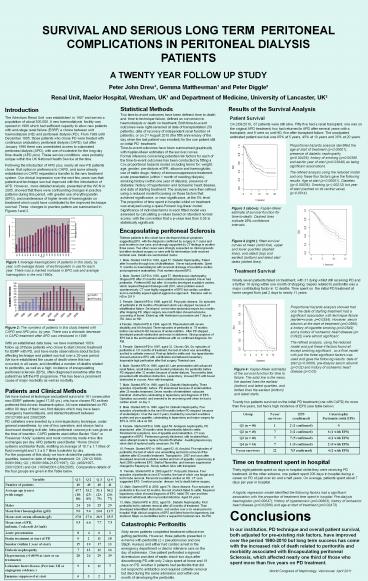
Figure 1Average haemoglobins of patients in this
study, by year, with average doses of
erythropoietin in use for each year. There was a
marked increase in EPO use and average
haemoglobin in the mid 1990s..
Treatment Survival
Ninety seven patients failed on treatment, with
31 dying whilst still receiving PD and a further
16 dying within one month of stopping. Sepsis
related to peritonitis was a major contributing
factor in 12 deaths. Time spent on the initial
PD treatment at home ranged from just 2 days to
nearly 11 years.
Proportional hazards analysis showed that only
the date of starting treatment had a significant
association with technique failure
(earlierworse, p0.0354). However, serum albumin
at the start of treatment (p0.0569), a history
of cigarette smoking (p0.0549) and a history of
ischaemic heart disease (p 0.0922) were almost
significant. The refined analysis, using the
reduced model and just these 4 factors found all
except smoking significant , so a final model
with just the three significant factors was used
and gave the following results date of start
(plt0.0006) pre-dialysis serum albumin (plt0.02)
and history of ischaemic heart disease (plt0.03)
Figure 2 The numbers of patients in this study
treated with CAPD and APD plus, by year. There
was a dramatic decrease in CAPD treatment after
APD was introduced in 1996
With an established data base, we have maintained
100 follow up of those patients who chose to
start chronic treatment for ESRF with PD, and
have made observations about factors affecting
technique and patient survival over a 20-year
period. We have established the cause of death
where this has occurred, in all cases, and
identified a number of deaths related to
peritonitis, as well as a high incidence of
encapsulating peritoneal sclerosis (EPS), often
diagnosed sometime after the patient has left the
PD programme. This has been a prominent cause of
major morbidity as well as mortality.
Figure 4 Kaplan-Meier estimates of the survival
function for time to failure. The solid line is
the mean, the dashed lines the earliest (bottom)
and latest quartiles, and dotted lines the
earliest (bottom) and latest starts.
Patients and Clinical Methods We have looked
at technique and patient survival in 161
consecutive new ESRF patients (aged 17-85 yrs.)
who have chosen PD as their preferred first
chronic treatment option. All were established on
PD within 90 days of their very first dialysis
which may have been emergency haemodialysis, and
started treatment between 29/12/1989 and
2/08/2005. PD catheters were inserted by a
mini-laparotomy technique, under general
anaesthesia, by one of two operators, and always
had a downward draining exit site.
Intra-peritoneal vancomycin was given at the time
of insertion. CAPD patients used either Baxter
Solo or Fresenius Andy systems and most
commonly made 4 two litre exchanges per day. APD
patients used Baxter Home Choice systems and
Baxter fluids, instilling an average of 10.7
1.7 litres of fluid overnight and 1.3 0.7
litres Icodextrin by day. For the purposes of
this study we have divided the patients into
quartiles, based on date of starting treatment
Q1 (29/12/1989-9/06/1994) Q2
(16/06/1994-21/07/1997) Q3 (4/08/1997-29/01/2001
) and Q4 (16/04/2001-2/08/2005). Comparative
details of the four groups are given in the Table
below.
Twenty two patients survived on the initial PD
treatment (one with CAPD) for more than five
years, but had a high incidence of EPS (see table
below)
Time on treatment spent in hospital Thirty eight
patients spent no days in hospital whilst they
were receiving PD treatment. At the other
extreme, one patient spent 206 days in hospital
during a career on PD of just over six and a half
years. On average, patients spent about 7 days
per year in hospital.
A logistic regression model identified the
following factors had a significant association
with the proportion of treatment time spent in
hospital Pre-dialysis haemoglobin (p0.00647)
History of hypertension (p0.00803) history of
ischaemic heart disease (p0.02566) and age at
start of treatment (p0.02473)
Conclusions In our institution, PD technique and
overall patient survival, both adjusted for
pre-existing risk factors, have improved over the
period 1990-2010 but long term success has come
with the increased risk of death related to
peritonitis and morbidity associated with
Encapsulating peritoneal Sclerosis, which
affected nearly one third of those who spent more
than five years on PD treatment.
Catastrophic Peritonitis Sixty seven patients
completed treatment without ever getting
peritonitis. However, three patients presented in
extremis with peritonitis (2 x pseudomonas and
one Staph. Aureus) and either had cardiac arrest
in the emergency department or died in intensive
care on the day of admission. One patient
perforated a sigmoid diverticulum and died of
septic shock two days after discontinunig PD with
only 2 days spent at home and 19 days on PD.
Another 8 patients had peritonitis that did not
respond to antibiotics and required catheter
removal but died during the same admission and
within one month of developing the peritonitis.
World Congress of Nephrology, Vancouver, April
2011
Recommended

