

Gina Brisson, Ivy Cartagena, PowerPoint PPT Presentation
1 / 38
Title: Gina Brisson, Ivy Cartagena,
1
(No Transcript)
2
The Dangers of Online Sexual Exploitation
Gina Brisson, Ivy Cartagena, Allison
DAlessandro, Jessica Delguercio, Irene Guevera,
and Tracy Ronquillo
3
Persuasion
- Larsons definition of persuasion
- The process of co-creating a state of
identification
4
Need for Campaign
- Children fall victim to child pornography and
pedophiles on the Internet. - The Internet serves as a medium for stalkers and
sexual predators and allows complete strangers
into the home. - Parents do not take the extra precautions
necessary to ensure that their children are safe
when using the Internet. - 75 of adults are unaware of their childrens
online activities. - 1 out of 5 children are sexually solicited
online. - from the U.S. Department of Justice,
2001
5
Literature Review
- There are several theories that campaign
promoters apply to persuade certain audiences. - It is important to reach specific target
audiences with targeted messages. - There are various types of appeals to reach
certain audiences. - Using various types of media or channels to reach
target audiences is effective. - The composition of PSAs is integral to a
campaigns effectiveness. - Lacking specifics in a campaign will ensure a
campaigns failure.
6
Literature Review - Persuasion Theories
- Social Cognitive Theory
- People should have the confidence that they can
perform a suggestive behavior that the costs of
the behavior are outweighed by the benefits. - Ex The Study of Public Health Mass Media
Campaigns (2004). - Successful because people were convinced to
change their behavior because of its benefits.
7
Literature Review Target Audiences
- If there is no target audience the message will
be lost and no persuasion will occur. - Ex In an Anti-Drug Campaign that targeted two
different races (Caucasian and African-American) - it was seen that one channel (computer-based
PSAs) was more effective for Caucasians than for
African-Americans.
8
Literature Review Various Appeals
- To reach certain audiences, different appeals are
used. - Study of adolescent response to Anti-Drug PSAs
(1996) - Fear Appeals - Find that higher levels of threat
are the most effective. - MESH Project Campaign (2004), which promoted
expansion of self help group participation. - Used Maslows Belongingness appeal. People who
come together to share their problems feel
closeness.
9
Literature Review Variety of Channels
- Due to technology increases, there are more
channels to expose the message. - Driving Less For Better Air Campaign (2003).
- Nontraditional Channel - electronic highway signs
to drivers. - High Risk Drinking Among College Students (2002).
- Traditional Channel - Flyers, posters, the
college newspaper, and use of e-mail caught the
attention of college students the most.
10
Literature Review - Composition
- To aesthetically enhance the effectiveness of a
campaign, slogans, logos, and jingles are used. - Creates identification and makes the message
sticky. - Skin Cancer Reduction Campaign (2005).
- Slogan Fry now, pay later used as a fear
appeal.
11
Literature Review - Lacking specifics
- Without adequate information and organized
planning the campaign is doomed to fail. - Education Now and Babies Later Campaign (1997).
- Objectives not visibly articulated which led to
confusion among target audience. - Message was not timed properly and not sent when
action should be taken. - High Risk Drinking Among College Students (2002).
- Flawed in design and execution of ads.
12
Critical Analysis of a CampaignOnline
Sexploitation (2003)
- Target Audience parents of children under 18,
particularly girls - Objective Increase parent-child communication
and inform them of the necessary steps to protect
against online sexual exploitation. - Goal To decrease the number of sexually
solicited children online and create awareness of
the organization to parents.
13
Critical Analysis of a CampaignOnline
Sexploitation (2003)
- YALE Model
- IDENTIFICATION
- LEGITIMACY
- PARTICIPATION
- PENETRATION
- DISTRIBUTION
14
Critical Analysis of a CampaignOnline
Sexploitation (2003)
- IDENTIFICATION
- Consistent use of statistic (1 in 5 children are
sexually solicited online.) - Slogan Help Delete Online Predators
- Color Coding ads are in muted colors (blue,
gray) - Graphics consistent placement of organization
logos in corners of ads
15
Critical Analysis of a CampaignOnline
Sexploitation (2003)
- LEGITIMACY
- Spokesperson Jamie Lee Curtis
- Partnership with the National Center for Missing
and Exploited Children
16
Critical Analysis of a CampaignOnline
Sexploitation (2003)
- PARTICIPATION
- All ads encourage to go to web site
www.cybertipline.com - Interactive games on web site
- Encourage parents to spread the word about
campaign through free paraphernalia. (i.e. video,
brochure)
17
Critical Analysis of a CampaignOnline
Sexploitation (2003)
- PENETRATION
- Studies are still ongoing.
- DISTRIBUTION
- Has not reached this point.
18
Critical Analysis of a CampaignOnline
Sexploitation (2003)
- Narrative Theory analysis of print ad
- Behavior can be understood through a story or
drama. - Successful if reliable and coherent.
- Semantics of Commercials
- Archetypal metaphors dark images that symbolize
eeriness and desolation
19
Ethics of Online Sexploitation
- No propaganda, everything is based on research,
facts and statistics - People have an option to implement ideas from the
campaign into their lifestyle. - Carries a sincere message with good intentions.
20
Campaign Rationale
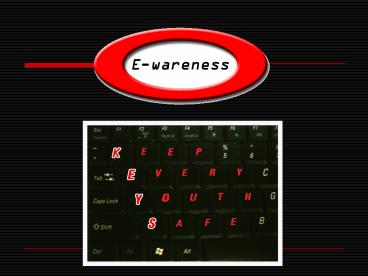
- Campaign E-wareness
- Slogan Keep Every Youth Safe (KEYS)
- Concept based on statistic that 75 of parents
are unaware of their childs online activities - Goal Increase parents awareness of childs
online activities and create parent-child
interaction.
21
Yale Model
- Identification
- E-Wareness logo, K.E.Y.S. Slogan
- Legitimacy
- Statistics
- Participation
- T-Shirts, Mouse Pads, Mugs, Eye masks, Post-its
- Penetration
- Through school PTA meetings, Back to School
Nights, Newsletters - Distribution
- Spokespeople and Sponsorships
22
Target Audience
- Demographics
- Average AgeParents and/or guardians of children
ages 8-18 - Social Class Lower Middle to Upper Middle Class
- Gender Male and Female
- Family Size at least 1 child
23
Target Audience
- Sociographics
- Tri-state area campaign with a national
expectancy. - Market segment Professionals/Non-Professionals
that live in suburbs with children ages 8-18
24
Target Audience
- Psychographics (VALS Model)
- Outer-Directed Consumers
- Makes up 67 of marketplace
- Belongers family oriented, traditional, blue
collar workers (non-professionals) - Achievers excellent incomes, live in suburbs,
tend to be leaders in politics, business, and
community activities (professionals)
25
Target Audience
- Motivations
- Maslow safety and security needs
- Packard emotional security
26
Target Audience
- Projections (Diffusion of Innovation)
- Right Now Early Adapter Stage
- Within next 3 years projected national
recognition - John Walsh (Americas Most Wanted) as
spokesperson in the future.
27
(No Transcript)
28
(No Transcript)
29
(No Transcript)
30
Aristotles Appeal Proofs
- Ethos (Credibility)
- Statistics
- National Center for Missing Exploited Children
- Pathos (Emotional)
- Fear Appeals
31
Images Myths
- Gender Myths
- The mother figure cleans, reads Cooking Light
- Father figure sits and reads the newspaper.
- Race Myths
- Use of Caucasian family as the average suburban
household.
32
Positioning of print PSA
- Magazines Regional Ads in O, The Oprah
Magazine, More, Redbook, GQ, Time, Newsweek,
Star, People, Cooking Light, Fortune, Business
Week - Regional Daily Newspapers The Star Ledger, The
Record, Herald News, The New York Times, The Wall
Street Journal
33
Positioning of TV Commercials
- Network TV
- Dr. Phil
- Oprah
- Cable TV (CNN, MSNBC, NJN, NICK, TVLAND)
- Morning News Programs
- Evening News Programs
34
Positioning of Radio PSA
- AM Radio (1010 WINS, News Radio, National Public
Radio) - FM Radio (Morning shows)
- Parenting Shows
35
Campaign Strategies Tactics
- Intensifying own good
- Repetition
- Composition
36
Dimensions
- Functional
- Simple Sentences
- Are you one of them?
- K.E.Y.S.-(Keep every youth safe)
- Semantics and Thematics
- Word Choice- Become E-Ware.
37
Persuasive Theory
- Yale Attitude Change Theory
- Attention
- Comprehension
- Acceptance
- Retention
- Action
38
(No Transcript)
Recommended

