

NACL Agricultural Herbicides for Effective Weed Control PowerPoint PPT Presentation
Title: NACL Agricultural Herbicides for Effective Weed Control
1
Understanding the Role of Herbicides in Modern
Agriculture
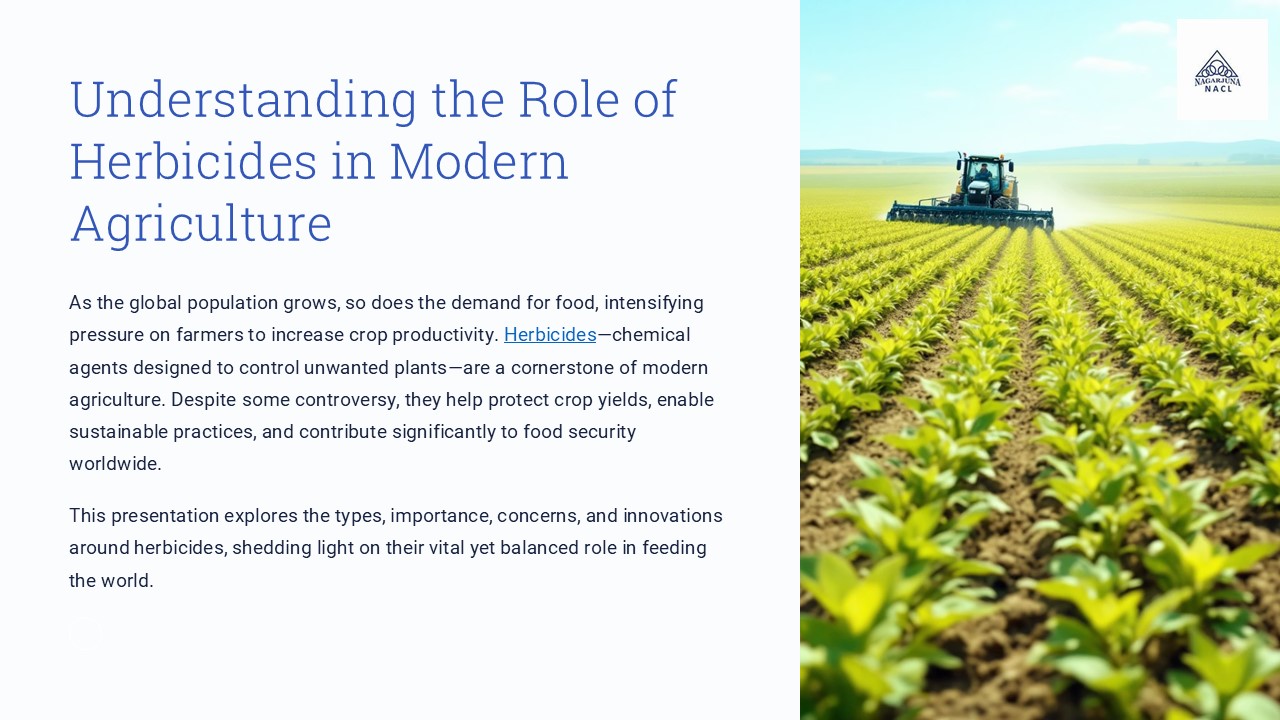
As the global population grows, so does the
demand for food, intensifying pressure on farmers
to increase crop productivity. Herbicideschemical
agents designed to control unwanted plantsare a
cornerstone of modern agriculture. Despite some
controversy, they help protect crop yields,
enable sustainable practices, and contribute
significantly to food security worldwide.
This presentation explores the types, importance,
concerns, and innovations around herbicides,
shedding light on their vital yet balanced role
in feeding the world.
2
What Are Herbicides?
Selective Herbicides
Target specific weed species without harming
crops, allowing precise weed management tailored
to plant types.
Non-Selective Herbicides
Kill all vegetation they contact, often used for
clearing fields or pathways where no plants
should grow.
Pre-Emergent Herbicides
Applied before weeds sprout, these prevent seed
germination and early weed establishment.
Post-Emergent Herbicides
Used after weeds emerge, targeting grown plants
to protect developing crops effectively.
3
Why Herbicides Matter in Modern Farming
Weed Control Higher Yields
Labor Cost Efficiency
Weeds compete with crops for water, nutrients,
light, and space, reducing yields. Herbicides
efficiently eliminate this competition, ensuring
crops have the resources to flourish.
Manual weeding is costly and time-consuming,
especially on large farms. Herbicides allow
farmers to save time, reduce labor costs, and
manage extensive areas effectively.
4
Supporting Soil Conservation with Herbicides
Preserving Soil Structure
Reducing Soil Erosion
Herbicides reduce the need for plowing,
maintaining soil integrity and preventing
compaction.
By avoiding tillage, farmers keep soil in place,
minimizing erosion caused by wind and water.
Improving Water Retention
Intact soil retains moisture better, supporting
crop growth and reducing irrigation needs.
5
Integrated Weed Management and Herbicide
Resistance
Chemical Control
Use herbicides thoughtfully as one component of
weed management.
Mechanical Control
Tillage and manual removal to reduce weed
pressure.
Biological Control
Utilizing natural predators or competitive plants
to limit weeds.
Cultural Practices
Crop rotation and planting techniques to suppress
weed growth.
6
Addressing Concerns About Herbicide Use
Health and Environmental Risks
Resistance Development
Overuse or misuse can contaminate water bodies,
harm wildlife, and pose risks to human health.
Proper handling and regulation mitigate these
effects.
Repeated use of the same herbicides can lead to
resistant weed species, complicating future
control and necessitating diverse management
strategies.
7
Innovations Shaping the Future of Herbicides
Eco-Friendly Formulations
Precision Application
1
2
Drones and sensors enable targeted herbicide use,
minimizing waste and exposure.
Development of biodegradable and less toxic
chemicals reduces environmental footprints.
Herbicide-Tolerant Crops
3
Genetically engineered crops allow better weed
control with minimal crop damage.
8
Conclusion Balancing Benefits and Risks
Essential Role
Responsible Use
Herbicides remain crucial for feeding a growing
population through efficient weed control.
Strict guidelines and integrated approaches help
reduce environmental and health risks.
Ongoing Innovation
Technological and scientific advances promise
more sustainable herbicide solutions ahead.
Adopting best practices ensures herbicides can
support agriculture sustainably while addressing
legitimate concerns for future generations.
9
THANK YOU Contact Us 91 40 24405100
Website naclind.com Email info_at_naclind.com
Recommended

