

Extracting Cotton For Use In The Manufacturing Of Paper PowerPoint PPT Presentation
Title: Extracting Cotton For Use In The Manufacturing Of Paper
1
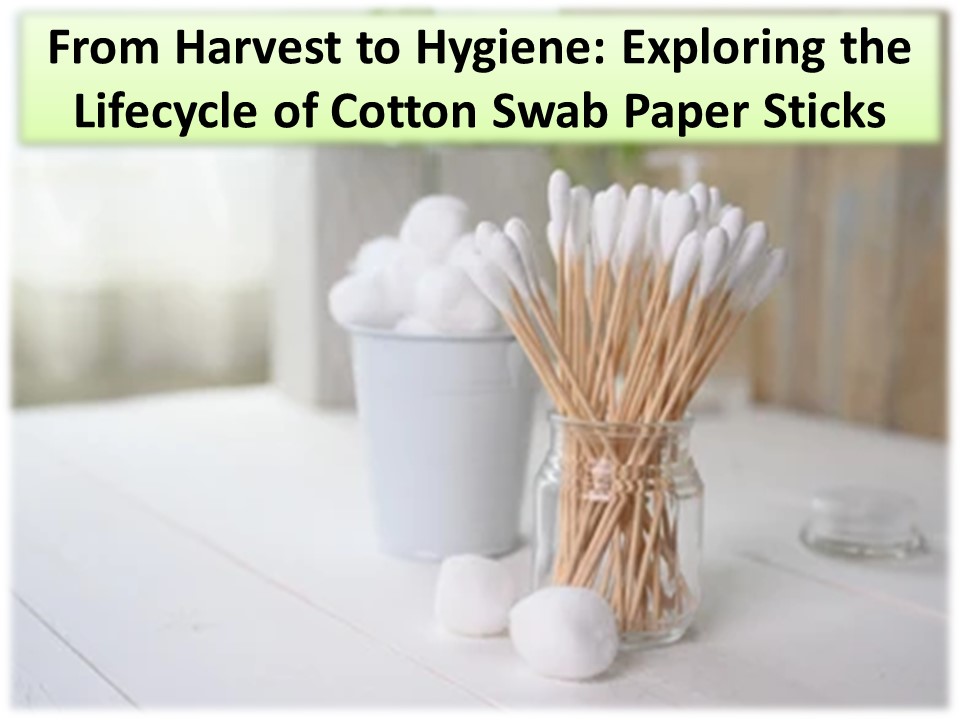
From Harvest to Hygiene Exploring the Lifecycle
of Cotton Swab Paper Sticks
2
- Despite the fact that cotton swabs are a common
household item, have you ever given any thought
to the manufacturing process behind them? Among
the components that are used in the manufacturing
of cotton swabs, cotton swab paper sticks are
among the most often utilized. The cotton tip is
equipped with a shaft that is both robust and
simple to grasp thanks to its use. Within the
scope of this blog article, we will see the whole
lifetime of cotton swab paper sticks, beginning
with the gathering of the raw materials and
ending with the manufacturing of the finished
product. - Here we will also dig into the manufacturing
process and concentrate on the numerous processes
that are involved in the production of these
vital products. You will get a fascinating
understanding of the lifetime of cotton swab
paper sticks by reading this post, regardless of
whether you are a consumer with an inquisitive
nature or an insider in the business.
3
Extracting Cotton For Use In The Manufacturing Of
Paper
- The harvesting of cotton is the first step in the
journey of a cotton swab paper stick. This is a
procedure that is strongly based in agricultural
traditions as well as current farming practices.
Cotton is grown in wide fields, where the fluffy
white bolls that hold the cotton fibers develop
under the sun. Cotton plants are carefully
nurtured in their environments. - Farmers tend to their crops with great care,
ensuring that they are placed in the best
possible growth circumstances by means of
irrigation, fertilizer, and insect control. After
the cotton bolls have reached their full
maturity, they are carefully removed from the
plants, which marks the beginning of a laborious
procedure that will be used to extract the
precious fibers. - In order to harvest cotton for the purpose of
paper manufacture, a combination of human labor
and mechanical processes is required. Through the
use of a number of methods, including ginning
machines, which separate the seeds from the
fluffy fibers, workers are able to carefully
separate via seeds. Following harvesting, the
cotton undergoes further processing in order to
provide the raw material that is required for the
creation of paper that in turs can create cotton
swabs.
4
- Cotton's journey from harvest to paper stick is a
memorial to the dedication of farmers, laborers,
and artisans engaged in every stage of the
process. From the sun-kissed fields to the
industrial facilities, the journey of cotton
highlights the craving of all those involved. - There are often multiple steps involved in the
life cycle of a cotton swab paper stick,
beginning with the extraction of raw materials
and ending with their disposal. The following is
an outline of the several stages that a cotton
swab paper stick goes through - The first step in the process is called "Raw
Material Extraction," and it entails the
extraction of raw materials that are required for
the production of the paper stick. In most cases,
this entails the collection of timber from
forests that are maintained in a sustainable
manner, with trees being replanted in order to
guarantee a renewable resource. - During the manufacturing process, the wood that
has been gathered is first processed in a
facility in order to generate the paper sticks.
For the purpose of ensuring that the wood is
acceptable for use in cotton swabs, this
procedure entails cutting, shaping, and sometimes
treating the wood. - Packaging and Distribution After the paper
sticks have been created, they are packed and
then delivered to a variety of merchants and
customers. - Use Cotton swabs are used by customers for a
variety of functions, including personal hygiene,
the application of cosmetics, cleaning, and the
creation of crafts.
5
Conclusion
- Thus, consider switching to eco-friendly
alternatives or reducing the use of cotton swabs
altogether to lessen the burden on the
environment
6
(No Transcript)
Recommended

